


OFFER / COMPRESSOR EQUIPMENT
CompressorsAir treatmentConsumption monitoring

Compressed air for production: reliable, efficient, and service-backed

Compressors and compressor systems: screw, vane, piston, and centrifugal. Focus: stable pressure, required air quality (ISO 8573), and lower energy costs through full-system optimization.

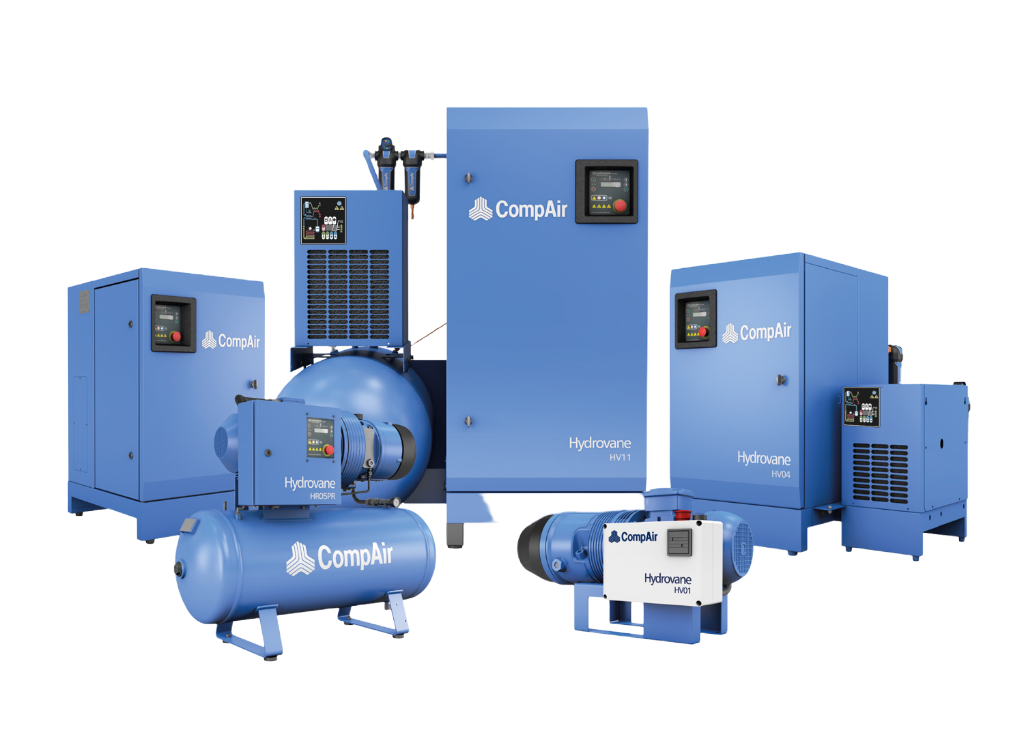
CompAir L02–L06

CompAir L02–L06

Reliable and compact screw compressors for continuous delivery of quality compressed air with low maintenance costs.

ScrewOil-lubricated1010 bar g
Learn more
CompAir L07–L11

CompAir L07–L11

The L series (7–11 kW) is available in fixed-speed and regulated-speed versions, offering high efficiency and flexibility in the 5–13 bar range.

ScrewOil-lubricated513 bar g
Learn more
CompAir L15–L22

CompAir L15–L22

The series includes fixed-speed and regulated-speed versions and is also available as a complete Airstation solution with air receiver and refrigerant dryer.

ScrewOil-lubricated7.513 bar g
Learn more
CompAir L23–L29

CompAir L23–L29

Robust design, high energy efficiency, and continuous delivery of quality compressed air.

ScrewOil-lubricated513 bar g
Learn more
CompAir L30–L37

CompAir L30–L37

Designed for low operating costs, stable air supply, and outstanding energy efficiency (e-models).

ScrewOil-lubricated513 bar g
Learn more
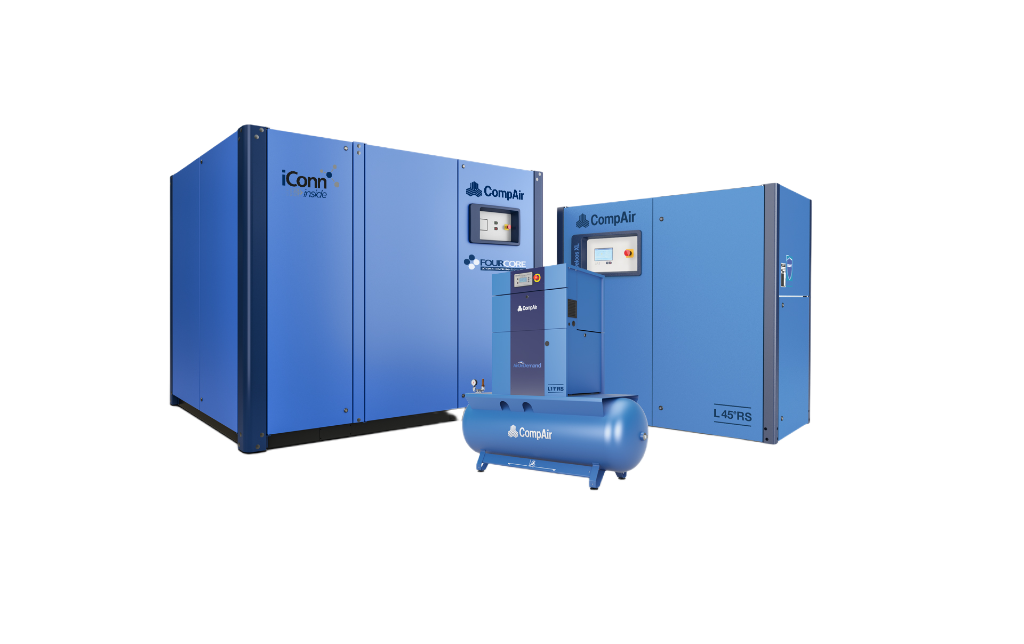
CompAir L45–L55

CompAir L45–L55

Oil-lubricated screw compressors with single-stage or two-stage design and fixed-speed or regulated-speed operation.

ScrewOil-lubricated513 bar g
Learn more
CompAir L75

CompAir L75

Industrial screw compressor with high efficiency for larger systems, offering stable operation and easy maintenance.

ScrewOil-lubricated513 bar g
Learn more
CompAir L90–L132

CompAir L90–L132

L series for larger industrial systems with robust design, optimized efficiency, and variable-speed option for lower energy consumption.

ScrewOil-lubricated513 bar g
Learn more
CompAir L110FC–L290FC

CompAir L110FC–L290FC

New generation of oil-lubricated screw compressors with FourCore technology.

ScrewOil-lubricated7.513 bar g
Learn more
CompAir L160–L290

CompAir L160–L290

L series for large industrial systems with robust operation, high efficiency, and both fixed-speed and regulated-speed options.

ScrewOil-lubricated7.513 bar g
Learn more
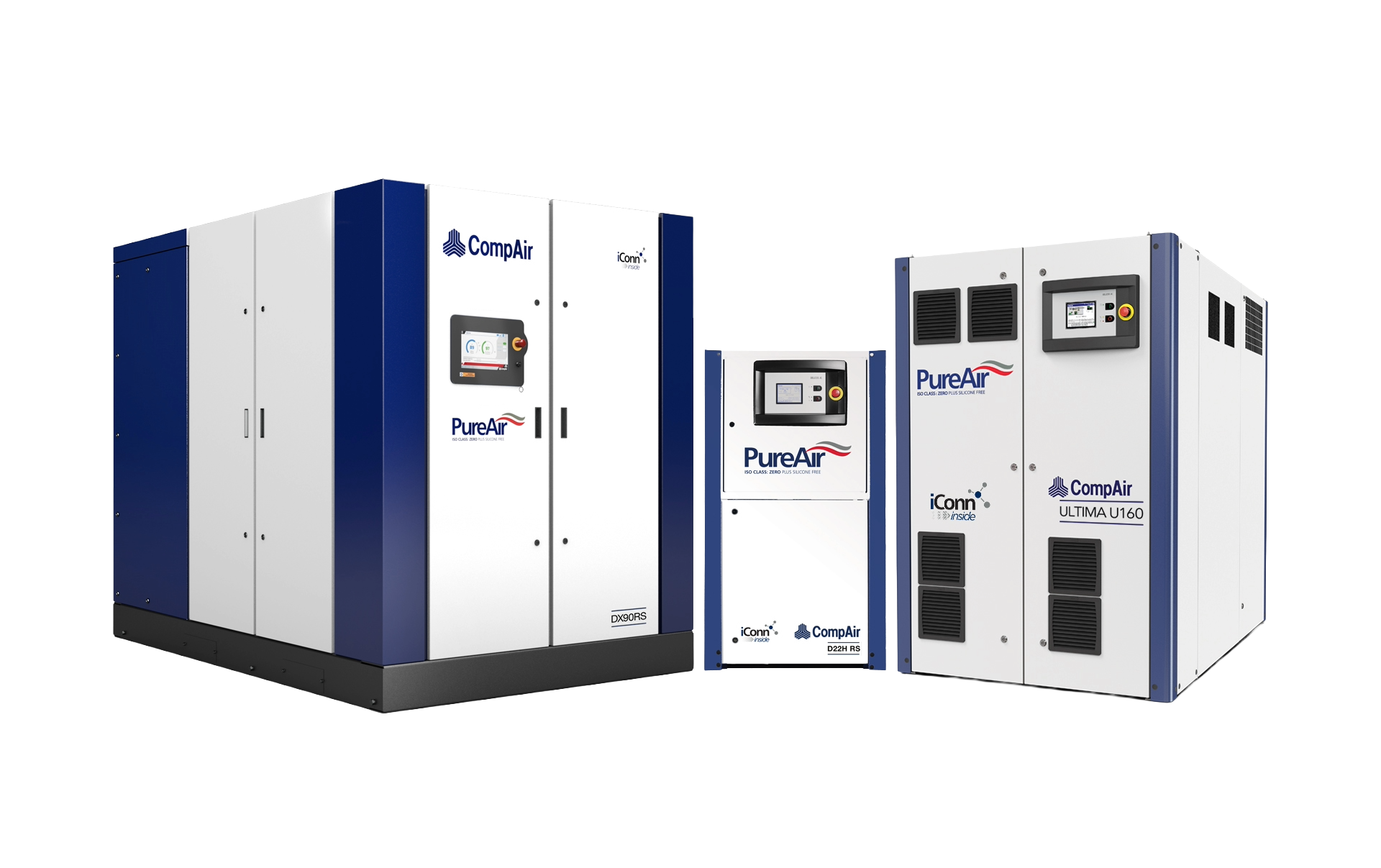
CompAir Ultima

CompAir Ultima

Ultima combines high efficiency and certified oil-free air (Class 0) in a compact, modular design for lower lifecycle costs.

ScrewOil-free410 bar g
Learn more
CompAir D15H–D37H

CompAir D15H–D37H

Oil in compressed air means a risk of reject parts, contamination, and downtime. The D-Series delivers certified 100% oil-free air.

ScrewOil-free510 bar g
Learn more

General industry

tooling, production lines, and automation

Food industry

packaging, pneumatics, and strict air quality requirements

Pharmaceutical industry

process validation, air purity, and high reliability

Metal industry

blowing, cleaning, CNC machining, and pneumatic systems

Electronics industry

controlled conditions, stable pressure, and consistent quality

Automotive industry

paint shops, robotic cells, and assembly lines

Textile industry

pneumatic transport, weaving machines, and cleaning

Workshops

versatile use, flexibility, and easy integration

FAQ

Frequently asked questions

How do we choose compressor power?
Compressor power is selected based on actual system needs: required air flow (m³/min, Nm³/h, or l/min), required working pressure (bar g), operating regime (hours per year), and demand profile (constant or variable load). It is also important to account for simultaneity of consumers, peak demand, and future system expansion. An undersized compressor causes pressure drops and increased wear, while an oversized one raises investment and energy costs unnecessarily. In larger systems, a combination of multiple compressors is often used for more flexible and energy-efficient operation.
Why is a compressed air dryer important?
A dryer removes moisture from compressed air, preventing condensate, pipeline corrosion, and equipment damage. Stable air quality is essential for reliable operation of pneumatic systems, valves, tools, and production processes. Choosing the right dryer depends on the required dew point, application type (e.g., food or pharmaceutical), and ambient conditions. Refrigerated dryers are commonly used for general industrial applications, while adsorption dryers are used when very low dew points are required.
How can we reduce energy costs in a compressor system?
Energy costs are reduced through full-system optimization. Key measures include choosing the right control strategy (e.g., variable speed drive – VSD compressors), eliminating network leaks, lowering system pressure to the actual required level, and ensuring proper air treatment. Continuous consumption monitoring is also critical, as it helps detect losses in time and optimize operation. A well-optimized system can reduce energy use by 20–40%. Heat recovery from compressors can provide additional major savings.
What is the difference between a fixed-speed and a VSD compressor?
Fixed-speed compressors run at constant motor speed and regulate pressure by start/stop cycles or unloaded operation. In systems with variable demand, this often leads to higher energy use. VSD compressors (Variable Speed Drive) adjust motor speed to actual air demand, so they produce only as much compressed air as the system currently needs. The result is more stable network pressure and lower electricity consumption.
How much electricity does a compressor consume?
Energy consumption depends on compressor power, operating pressure, compressor element efficiency, and operating regime. In industrial systems, energy can account for up to 70–80% of total compressor life-cycle costs. That is why proper system sizing, high-efficiency compressors, and continuous monitoring are essential. Even small pressure optimizations or leak repairs can deliver meaningful savings.
What does compressed air production cost?
The cost of compressed air production depends mainly on electricity price, compressor efficiency, and losses in the distribution system. In industry, energy is often the largest share of total cost. That is why it is important to monitor consumption, optimize network pressure, regularly eliminate leaks, and use compressors with high energy efficiency.
What compressed air pressure is optimal?
The optimal pressure is always the lowest pressure that still ensures reliable operation of all consumers in the system. Each additional bar can increase compressor energy consumption by about 6–8%. It is therefore recommended to regularly review actual production needs, optimize compressor settings, and minimize pressure drops in pipelines and filters.
Contact

Quick inquiry

Send your basic details and a short project description. We usually respond within 24 hours.

Consulting and solution proposal
Delivery, installation and service
Send message
* required fields
Your message is sent directly to our email inbox.
Where to find us
Directions
Pod lipami 4 · 1370 Logatec, Slovenija