

Energy monitoring
Continuous flow and consumption measurement per line, cost per m³ and ISO 50001 reports.
CS InstrumentsMade in Germany
Dew point, flow and consumption, pressure, residual oil, particles and leaks – with CS Instruments measuring technology you know how much air you use, what quality it is and what it costs. We help you choose the measuring points, supply and install the device and connect it to your control system.

New deviceNew from CS Instruments
Flow, consumption and temperature – optionally pressure and dew point – in one compact sensor you set up from your phone.

What do you want to measure?
Each category has its own page with models, technical data, a comparison and selection tips.




Applications
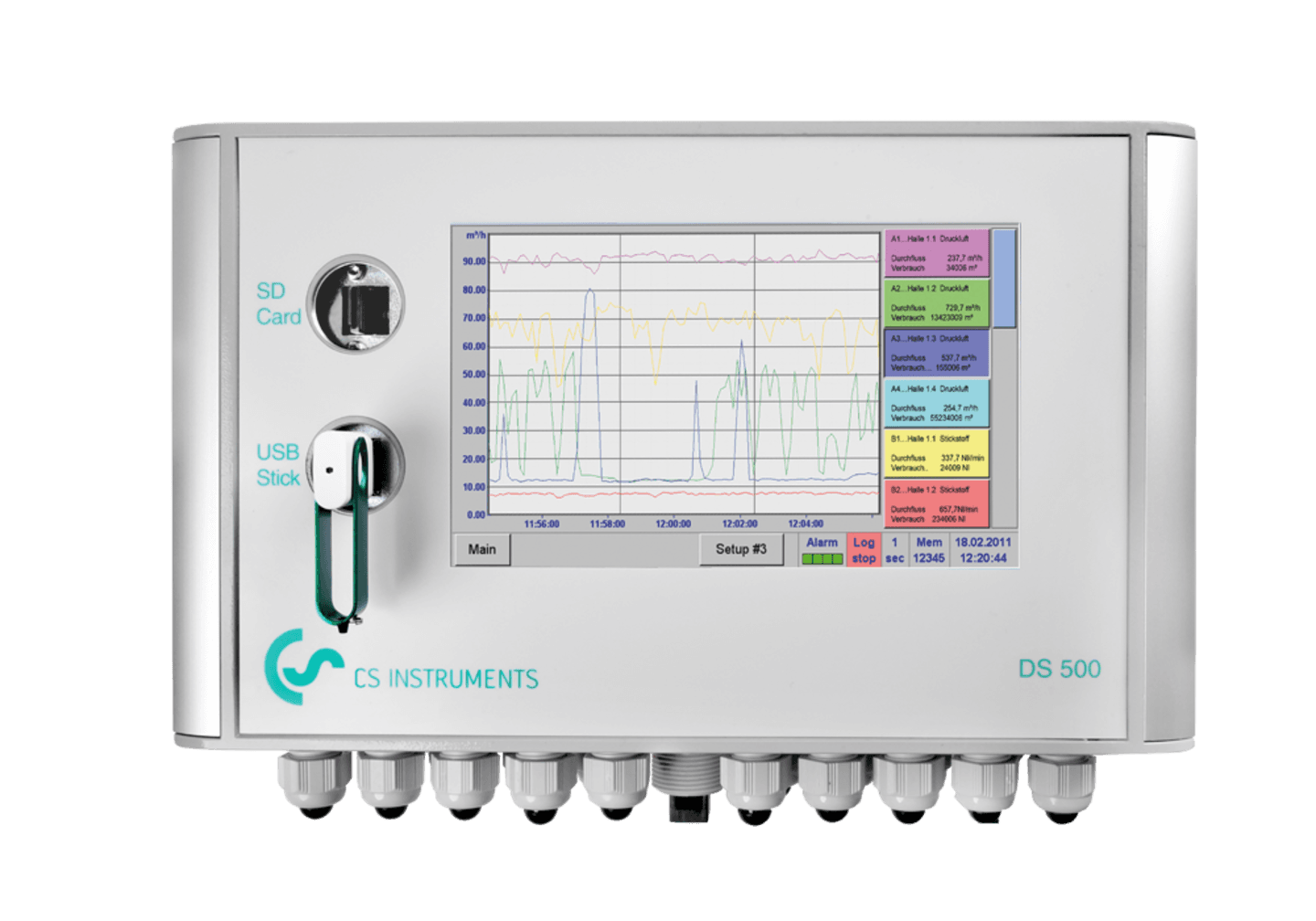
We combine devices according to your goal – one data logger can record flow, pressure, dew point and electrical power at the same time.
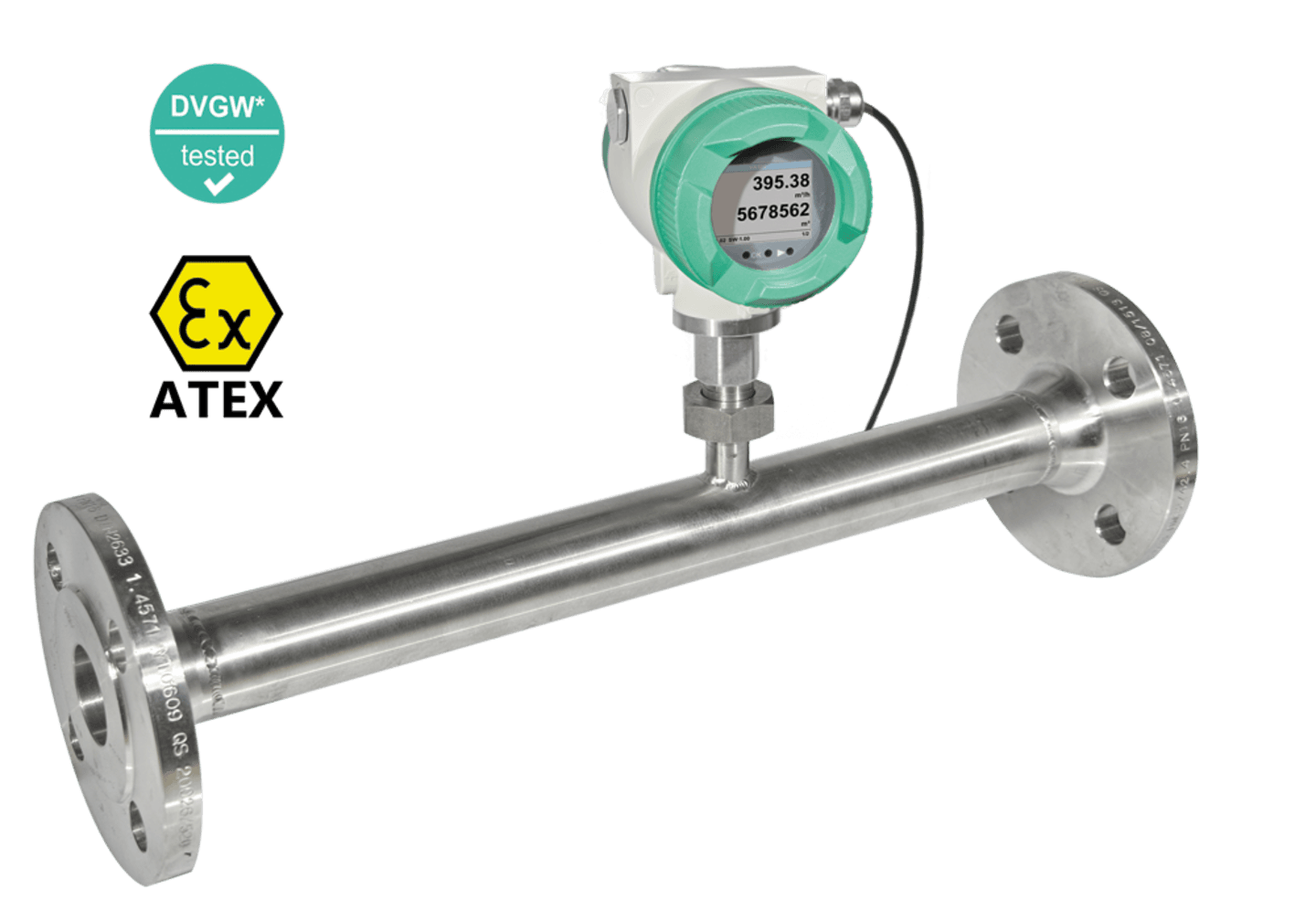
Continuous flow and consumption measurement per line, cost per m³ and ISO 50001 reports.
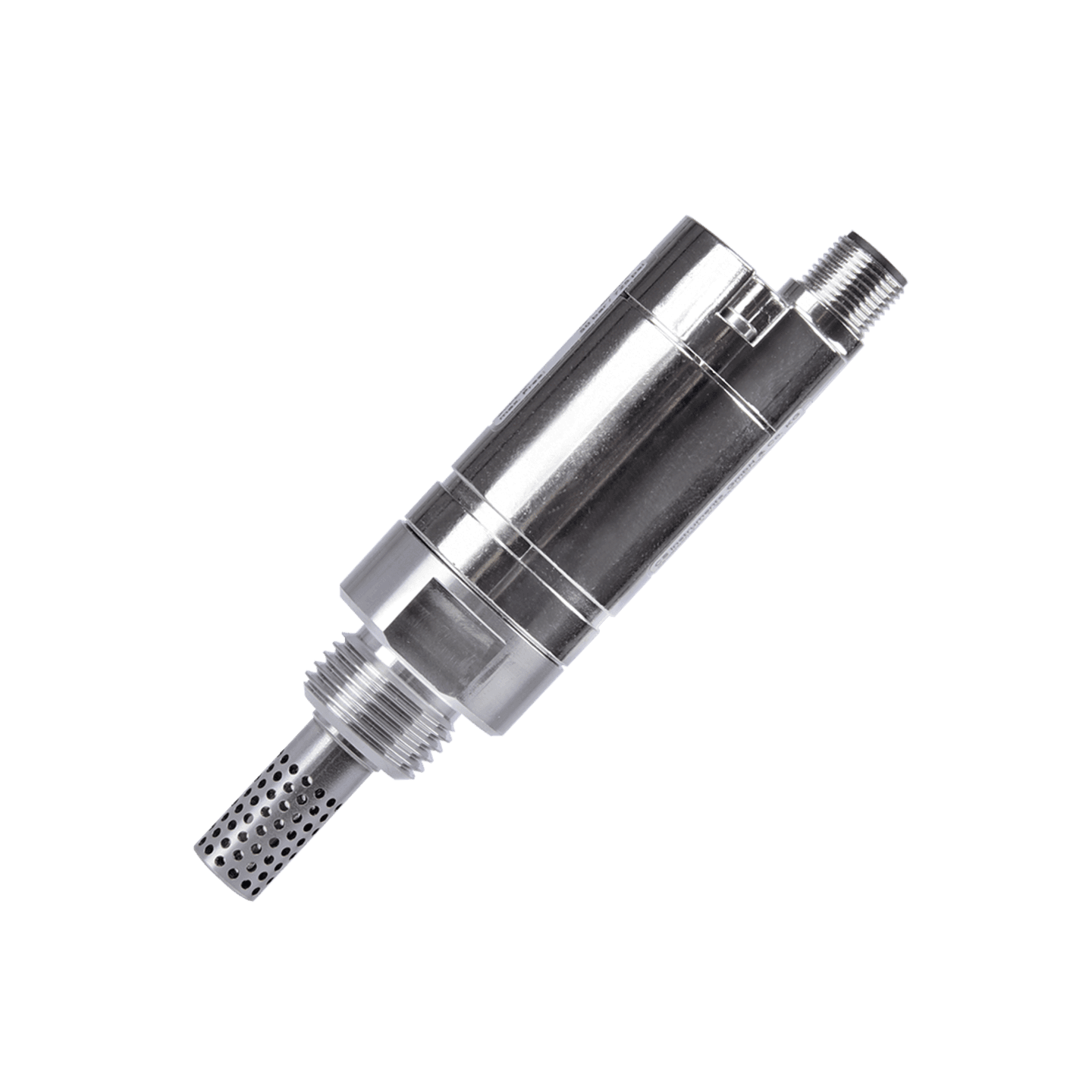
Dew point, residual oil and particles – for the food, pharmaceutical and electronics industries.
Ultrasonic detectors and an acoustic camera show the leak, its size in l/min and its cost in €.
Mobile measurement of power, flow, pressure and ambient conditions shows the specific power in kWh/m³.
Why measure
of the total cost of a compressed air system is electricity.
of compressed air is lost through leaks in mature networks.
of full-load power is used by a compressor idling – without delivering any air.
energy saved when the compressor intake air is 10 °C cooler.
Source: CS Instruments catalogue 2025/26.
ISO 8573-1:2010
ISO 8573-1 defines limit values for solid particles, water (pressure dew point) and oil. A class is written e.g. as ISO 8573-1 [1:2:1] – particles, water and oil in that order.
A refrigeration dryer reaches about +3 °Ctd (class 4), an adsorption dryer -40 °Ctd (class 2) or -70 °Ctd (class 1). Only a measurement shows whether the dryer really works.
Dew point meters →Class 1 allows at most 0.01 mg/m³ of oil. OIL CHECK 500 measures residual oil vapour from 0.001 mg/m³ – continuously and stationary.
Air quality →The PC 400 laser particle counter counts particles from 0.1 µm in three size classes, as ISO 8573-1 requires for class 1.
Particle measurement →| Class | Solid particles – number per m³ | Water | Oil (aerosol + vapour) | ||
|---|---|---|---|---|---|
| 0.1–0.5 µm | 0.5–1 µm | 1–5 µm | Pressure dew point | mg/m³ | |
| 0 | As specified by the user – stricter than class 1 | ||||
| 1 | ≤ 20 000 | ≤ 400 | ≤ 10 | ≤ -70 °C | ≤ 0.01 |
| 2 | ≤ 400 000 | ≤ 6 000 | ≤ 100 | ≤ -40 °C | ≤ 0.1 |
| 3 | – | ≤ 90 000 | ≤ 1 000 | ≤ -20 °C | ≤ 1 |
| 4 | – | – | ≤ 10 000 | ≤ +3 °C | ≤ 5 |
| 5 | – | – | ≤ 100 000 | ≤ +7 °C | – |
| 6 | – | – | – | ≤ +10 °C | – |
Source: CS Instruments catalogue 2025/26 (ISO 8573-1:2010).
Measurement and analysis
On-site measurements with CS Instruments devices and personal advice. We measure air quality, consumption, leaks and energy and deliver a report with recommended actions.

Compressed air quality directly affects process reliability, equipment lifetime, and final product quality. We measure dew point, solid particles, and oil aerosols and vapors to verify compliance with process and ISO requirements, and to ensure dryers and filtration systems are properly selected and configured.

Stable flow and pressure are essential for reliable operation of pneumatic equipment and the entire production process. Through measurements, we analyze actual consumption, load profiles, and pressure drops within the system. Based on the results, we identify bottlenecks, incorrect settings, and opportunities for compressor control optimization.
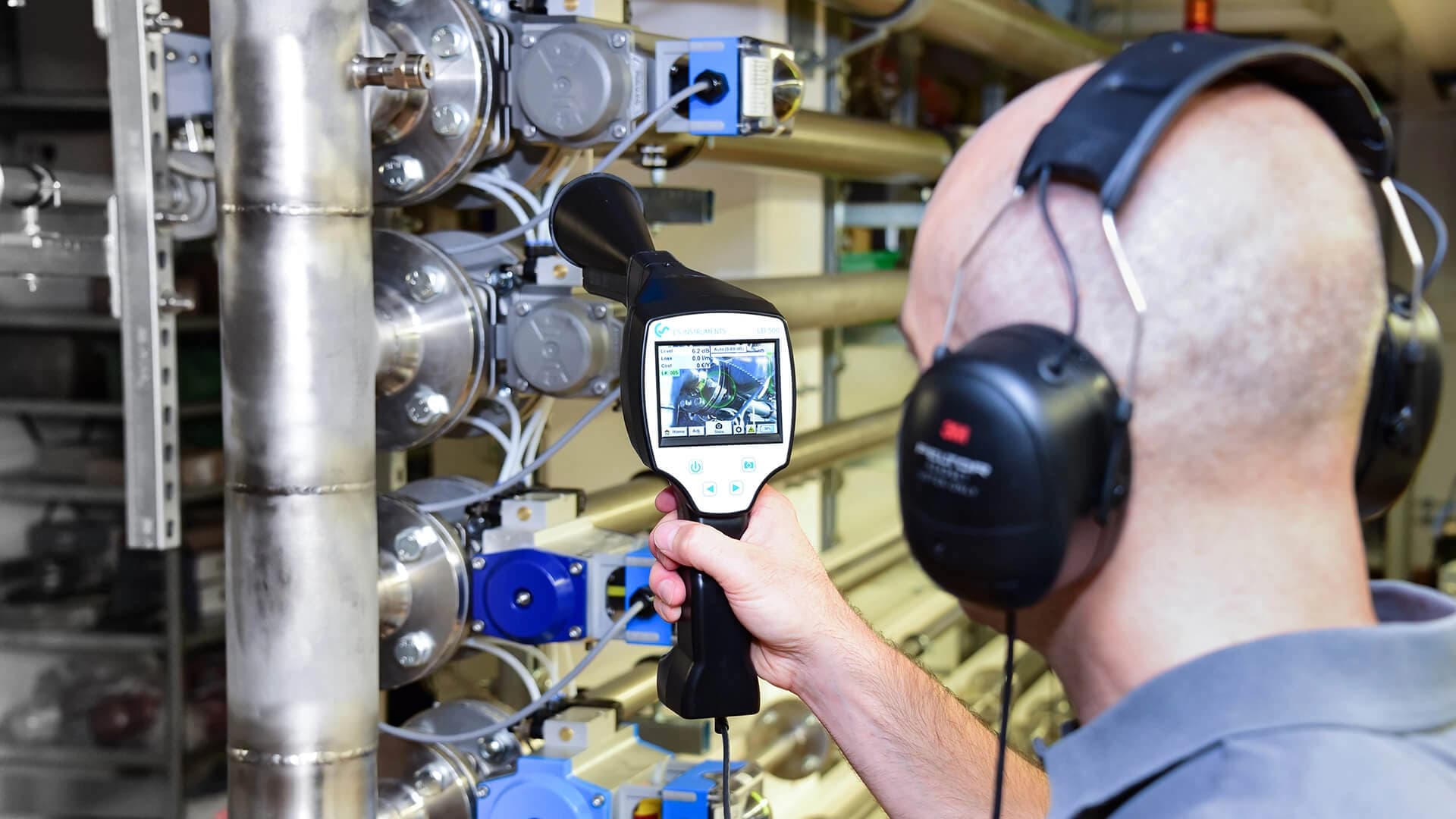
Leaks in compressed air systems are one of the largest sources of energy loss. By accurately identifying leak locations, we assess their impact on energy consumption and provide a prioritized action plan. This enables quick savings and improved system efficiency.

Vibration and temperature measurements enable early detection of mechanical issues such as bearing wear, misalignment, or overload. This reduces the risk of unplanned downtime, extends equipment lifetime, and improves compressor station reliability.

Energy consumption of a compressor station represents a significant share of operating costs. We analyze energy usage (kWh), load profiles, and peak demand to assess system efficiency. Based on the data, we propose measures for control optimization, loss reduction, and long-term cost management.
KOMP-R
A meter is only as good as its selection and installation. We take you through every step.
Based on pipe diameter, pressure, medium and purpose we recommend the meter and the installation point.
Insertion sensors are installed under pressure via a ball valve, without stopping production.
We connect 4…20 mA, Modbus or Ethernet and set up the data logger, alarms and software.
We organise periodic calibration of dew point and flow sensors in the CS Instruments calibration laboratory.
FAQ
For operating costs, flow and consumption measurement is key, as it reveals leaks and the actual consumption per department. For reliability and quality, the pressure dew point downstream of the dryer is key. Where air contacts the product, we add residual oil and particle measurement to ISO 8573-1.
Not for insertion probes (e.g. VA 500, VD 500, FA 510 with measuring chamber). The probe is installed and removed under pressure via a 1/2″ ball valve or quick coupling. Inline meters with a measuring section are installed in the pipe, so they are usually fitted during a planned shutdown.
Yes. CS Instruments sensors have 4…20 mA analogue outputs and digital interfaces such as Modbus-RTU, Modbus TCP, M-Bus, Ethernet (PoE) and IO-Link (depending on the model). DS 500 and DS 400 data loggers collect data from several sensors and pass it on.
We recommend annual calibration of dew point and flow sensors, more often for demanding processes or billing measurements. CS Instruments has its own calibration laboratories for flow and dew point meters.
Many models also measure nitrogen, oxygen, argon, CO₂, helium and vacuum. The meter is set to the correct gas when ordered, which is essential for accurate thermal flow measurement.
Fill in a short form and we will prepare a proposal for measurement equipment and implementation based on the medium, measuring range, and measurement objective.