

Evaporator-in-tank
The finned-coil evaporator sits inside the water tank. It allows high flow rates with low pressure drop, cools the tank itself and copes with contaminated process fluid.

MTAIndustrial cooling
Process chillers, heat pumps and free-cooling modules from Italian manufacturer MTA. KOMP-R helps with selection, installation, commissioning and service – from 1.7 kW to more than 1,300 kW of cooling capacity.
Cooling your industry, optimising your process.
Two fields
MTA groups its units by purpose. Choose a field to see the series developed specifically for it.
Chillers for machines, moulds and processes where the process fluid temperature directly affects product quality and cycle time.
Water chillers, heat pumps and free-cooling modules for air conditioning of production halls, office buildings, hospitals and data centres.
MTA technology
MTA builds its chillers specifically for industrial users. These solutions recur across every series.
The finned-coil evaporator sits inside the water tank. It allows high flow rates with low pressure drop, cools the tank itself and copes with contaminated process fluid.
The large tank absorbs sudden load changes. The Close Control version with hot-gas bypass keeps the outlet temperature within ±0.5 °C.
A stainless steel tank, copper/brass exchanger and stainless pump keep the fluid clean – essential for lasers, pharmaceuticals and food.
When it is cold enough outside, ambient air cools the process fluid free of charge while the compressors stay off. Integrated (ARIES G FC) or as an add-on FC4TAE/FC4ALL module.
Internal bypass, antifreeze protection, level sensor, phase monitor and high/low pressure switches. Every unit is tested in the factory before shipping.
RS485 Modbus serial output, xWEB300D EVO supervisor, BMS integration and up to 5 units linked in master/slave mode.
MTA range
Set the cooling capacity you need and the filters. The series that cover your duty point are shown.
Your requirements
Matching series: 19

Refrigerant: R290
More about the unit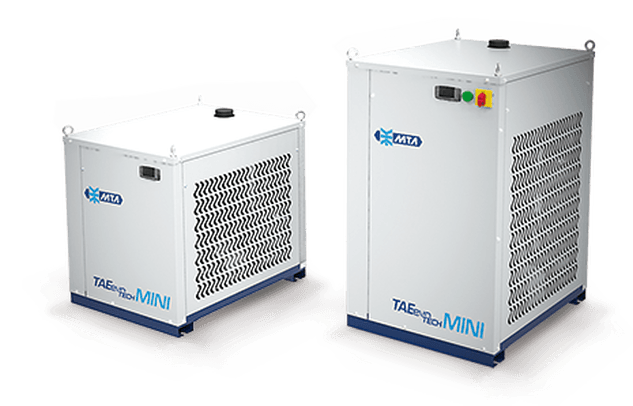
Refrigerant: R134a · R410A
More about the unit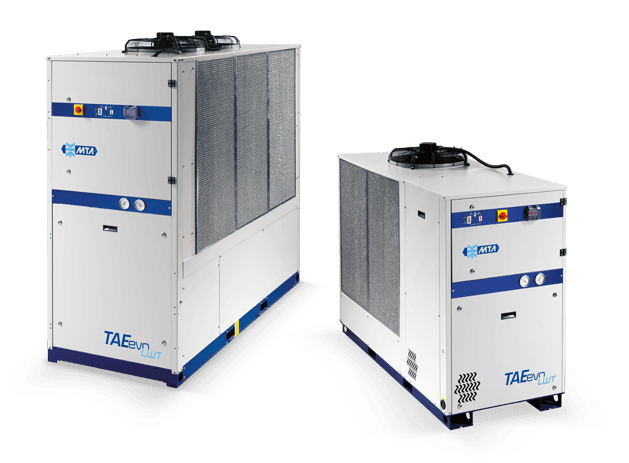
Refrigerant: R449A
More about the unit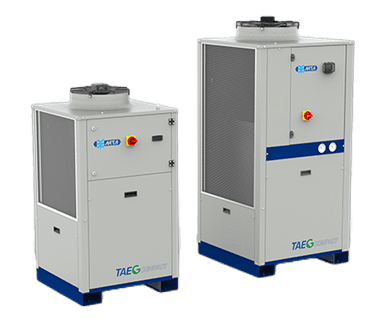
Refrigerant: R513A
More about the unit
Refrigerant: R290
More about the unit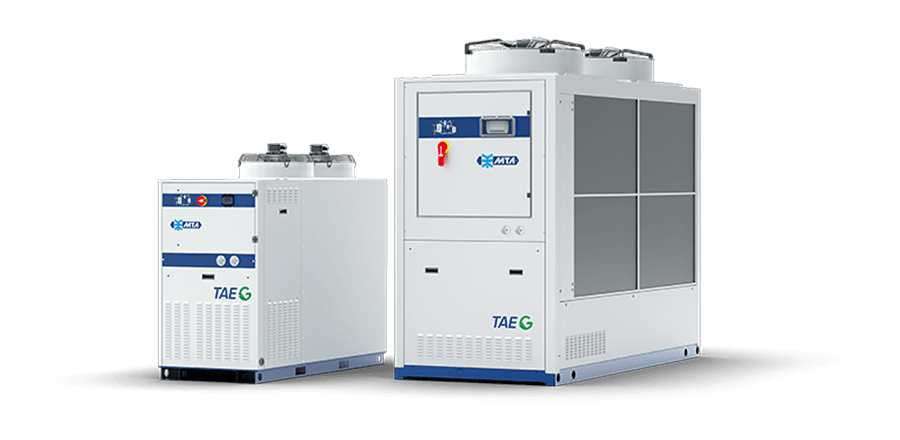
Refrigerant: R513A · R454B
More about the unit
Refrigerant: R410A
More about the unit
Refrigerant: R410A
More about the unit
Refrigerant: R410A
More about the unit
More about the unit

Refrigerant: R454B
More about the unit
Refrigerant: R454B
More about the unit
Refrigerant: R454B
More about the unit
Refrigerant: R454B
More about the unit
Refrigerant: R454B
More about the unit
Refrigerant: R454B
More about the unit
Refrigerant: R290
More about the unit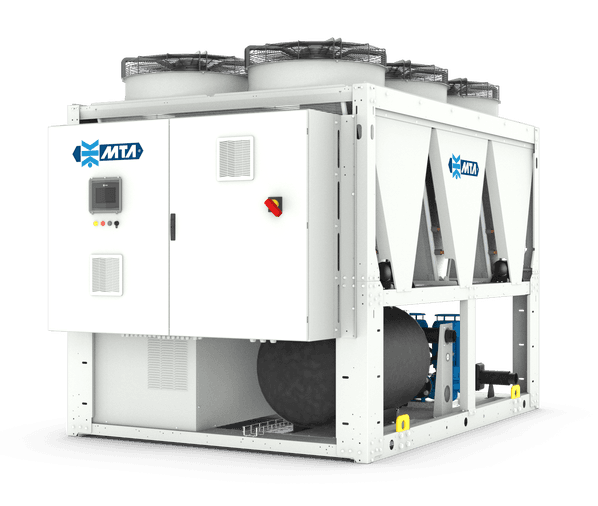
Refrigerant: R290
More about the unit
Refrigerant: R454B
More about the unitNominal values to EN 14511. Actual capacity depends on water and ambient temperatures – we prepare the exact selection for your process.
Free-cooling in practice
An example from the MTA catalogue: an FC TAE 161 module is added to an existing TAEevo Tech 161 chiller. Whenever it is colder outside than the process water, ambient air removes the heat.
Source: MTA Product Guide Industrial Process Cooling (04-2021). We run the calculation for your location and operating profile with MTA software.
Applications
From injection moulding to hospitals – every industry has its own requirements for temperature, cleanliness and reliability.
 Process cooling
Cooling of moulds, injection-machine hydraulics, extrusion heads and rolls. Shorter cycles, fewer surface defects.
 Process cooling
A stable ±0.5 °C keeps the wavelength and beam quality constant. The non-ferrous circuit protects the optics.
 Process cooling
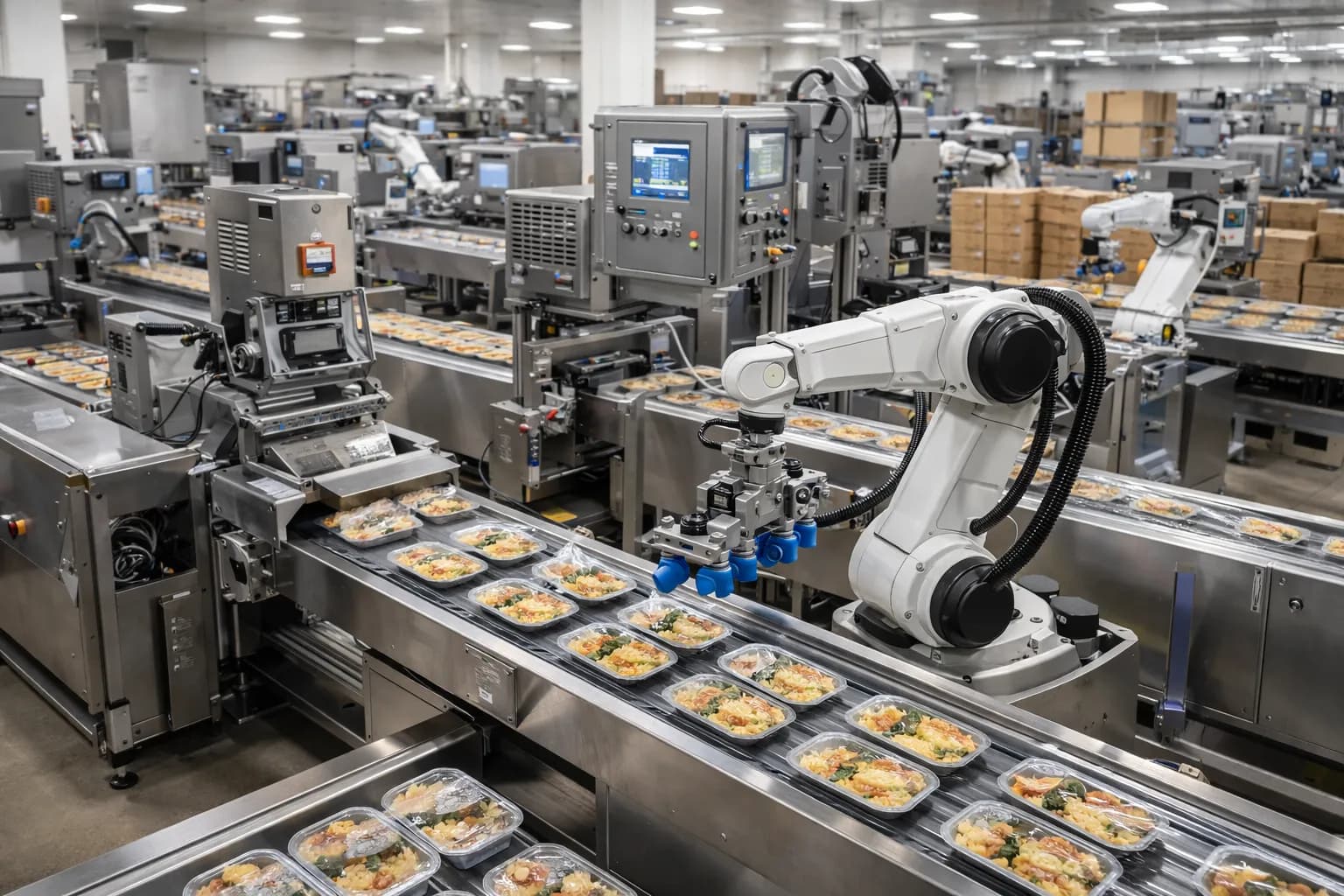
Dairies, breweries, bakeries, meat and vegetable processing. Stainless circuits and housings for hygiene.
 Process cooling
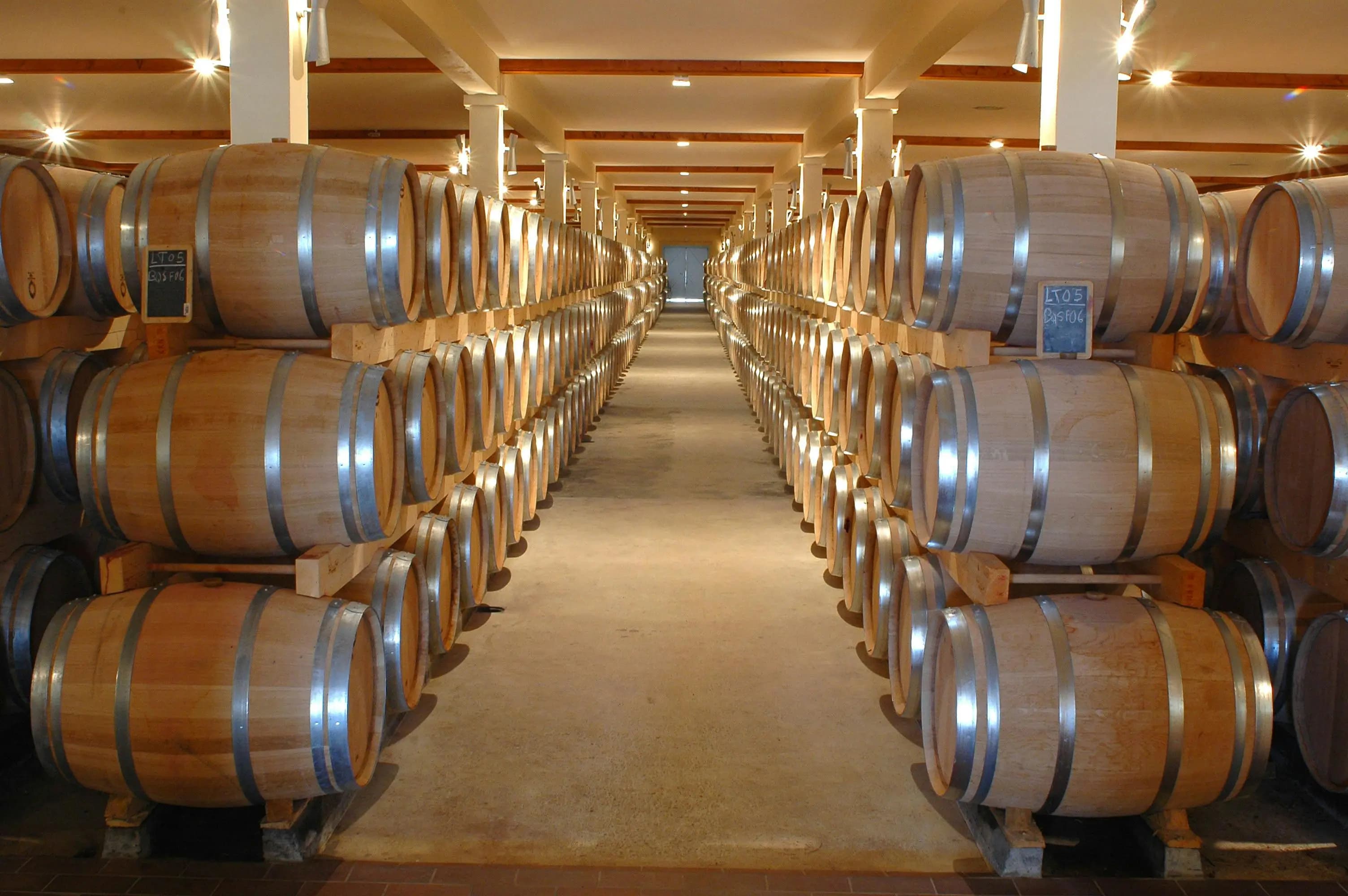
Fermentation control, cooling of storage vats and cold tartaric stabilisation below 0 °C.
 Process cooling
Jacketed vessels, laboratories, solvents. Redundant refrigerant circuits and fast capacity response.
 Process cooling
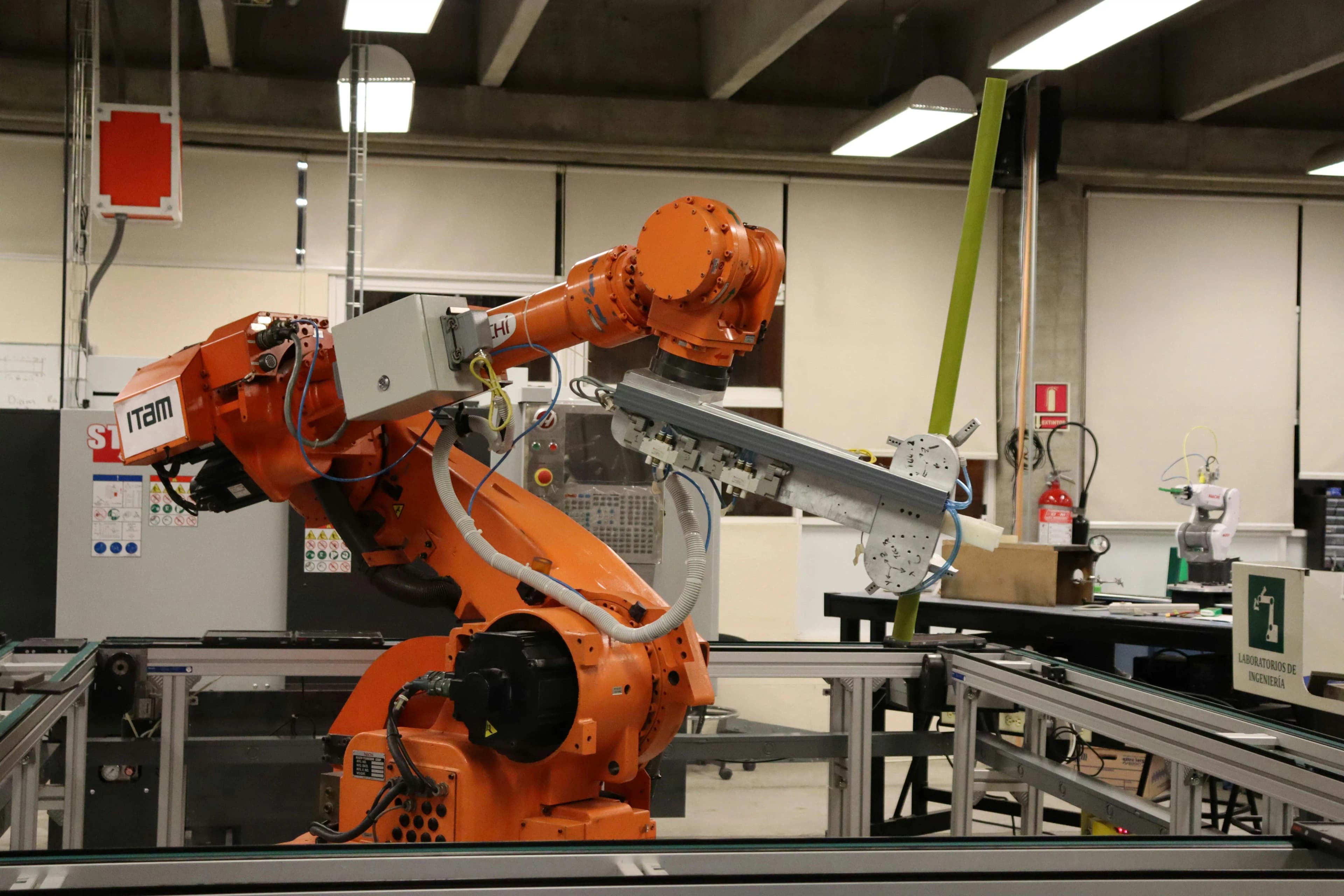
Cooling of spindles, cutting oils and hydraulics for repeatable accuracy and longer tool life.
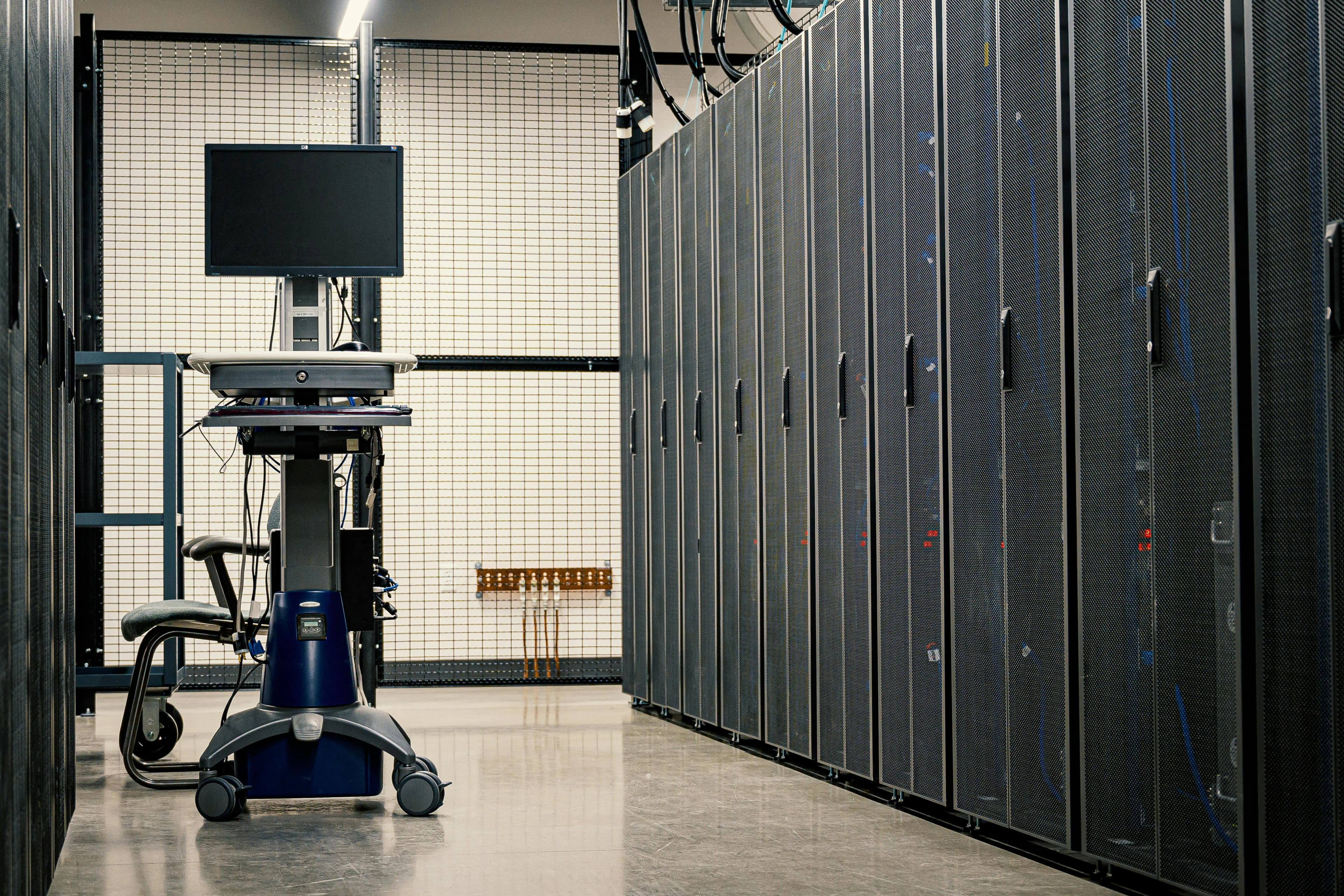 Air conditioning
Continuous cooling of server rooms, with free-cooling in the colder months.
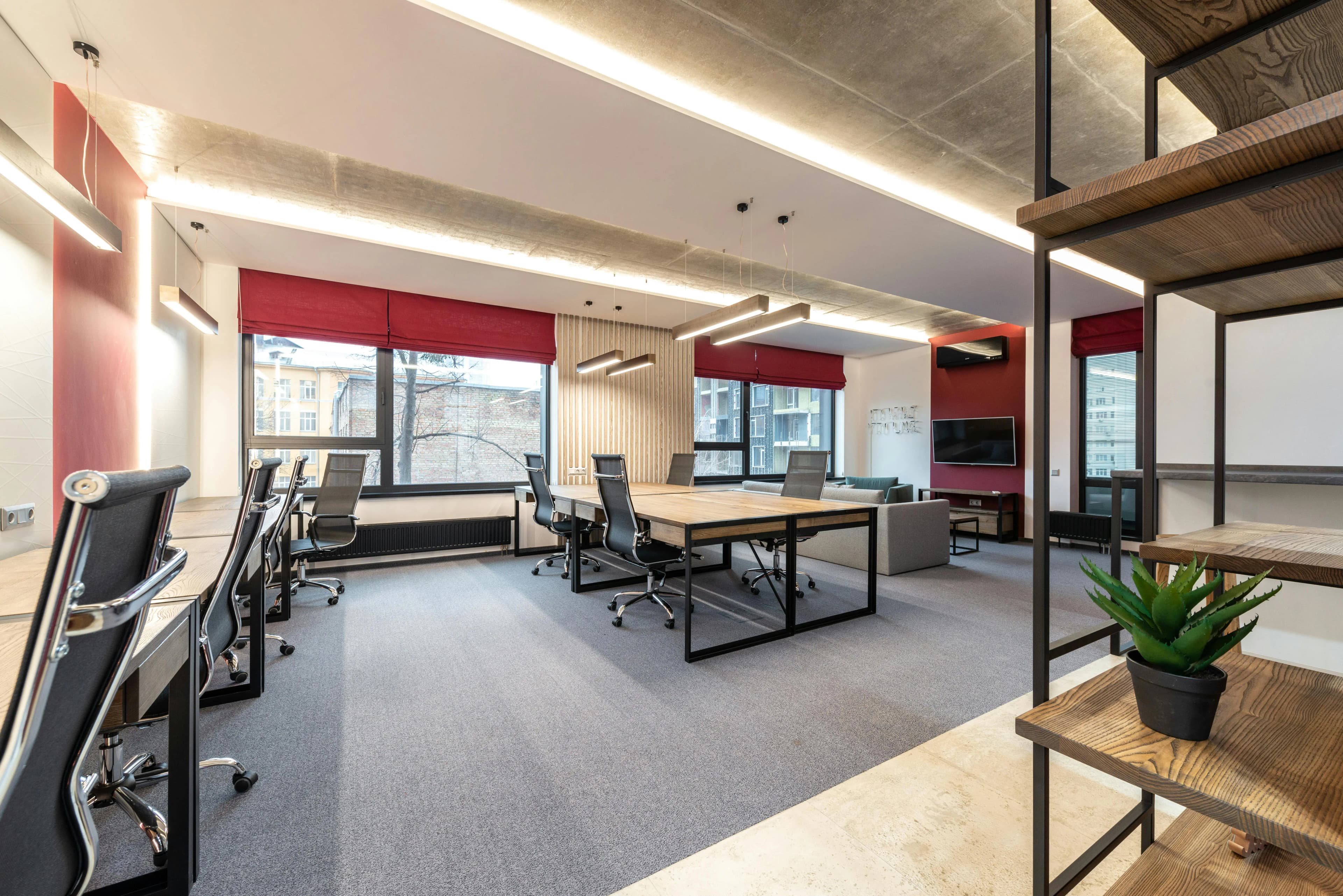 Air conditioning
Cooling and heating with heat pumps, integrated into the building management system (BMS).
 Air conditioning
Reliable air conditioning of hospital rooms and laboratories, including redundant units.
 Air conditioning
Quiet and inverter versions for large spaces with fluctuating loads.
KOMP-R + MTA
A chiller is only part of the system. KOMP-R takes care of the whole – with original parts and MTA factory support.
From your data (kW, temperatures, fluid, operation) we select the series and version, with free-cooling where it pays off.
Pumps, tanks, glycol, pipework and outdoor or indoor installation.
Setting up control, protections and supervision, and handover with operating instructions.
Regular inspections, condenser cleaning, leak checks and fast delivery of spare parts.
FAQ
To properly select a chiller, we need basic process data: required cooling capacity (kW), average and peak heat load, supply and return temperatures (e.g. 12/7 °C), type of medium (water or glycol mixture), flow rate, and system operating mode (24/7, cyclic, or seasonal). Environmental conditions are also important – whether the unit is installed indoors or outdoors, ambient temperature, and any constraints regarding noise or installation space.
Cooling capacity depends on the amount of heat that must be removed from the process. It is calculated based on machine heat loads, cooling medium flow rate, and temperature difference (ΔT) between supply and return. It is also important to consider peak loads and future production expansion during sizing.
Air-cooled chillers dissipate heat directly into the environment via condensers with fans, making them suitable for simple outdoor installation without additional cooling infrastructure. Water-cooled systems use cooling towers or other water sources, enabling higher efficiency in larger industrial systems and more stable operation under high loads.
Glycol is used when there is a risk of freezing or when the system is installed outdoors. A water-glycol mixture lowers the freezing point and protects pipes, heat exchangers, and pumps from damage. When selecting the concentration, it is important to consider minimum ambient temperature and the effect of glycol on flow and heat transfer.
In most cases, energy consumption can be significantly reduced. This is achieved through optimal system sizing, power control (e.g. inverter or VSD compressors), proper temperature difference (ΔT) settings, and optimized flow rates. In certain applications, additional savings can be achieved with free-cooling solutions, where part of the cooling is provided by ambient air without compressor operation.
Preventive maintenance is crucial for reliable system operation. Regular cleaning of condensers and heat exchangers, leak checks, inspection of fans, pumps, and control systems, and monitoring of the cooling medium prevent efficiency losses and unexpected downtime. Proper service intervals extend equipment lifetime and ensure stable process temperatures.
Fill in a short form and we will prepare a configuration proposal based on load profile, environment, and energy efficiency goals.