

- Home
- Vacuum and blowers
- Elmo Rietschle
- Claw pumps
Elmo Rietschle · C-Series
Claw pumps C-Series.
Dry, contact-free vacuum pumps, compressors and combined pressure-vacuum pumps with internal compression – no oil in the compression chamber and significantly lower energy use than traditional rotary lobe blowers.

- ultimate vacuum (C-VLU)
- 30 mbar(a)
- capacity up to
- 1,140 m³/h
- series available
- 4
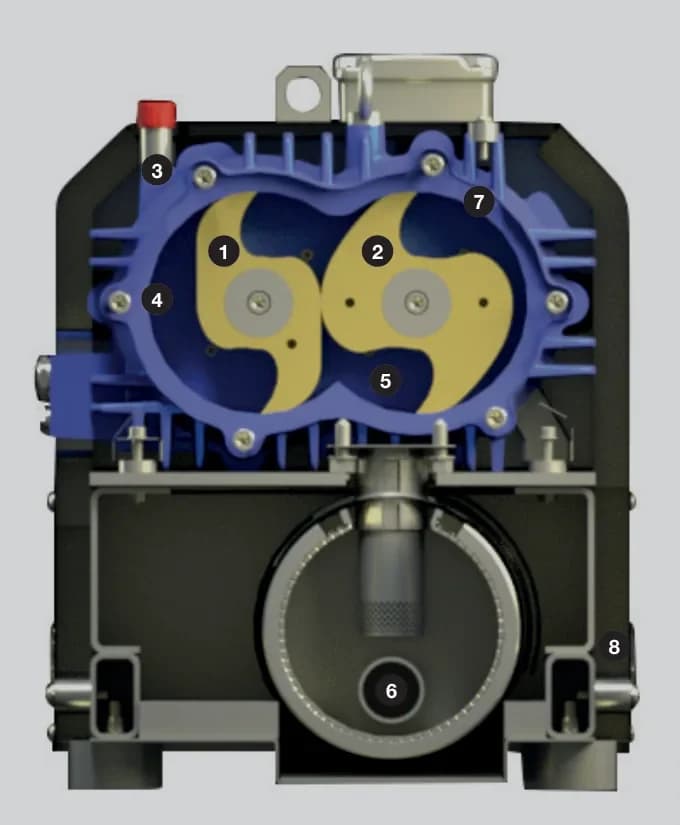
Operating principle
Internal compression without contact.
A claw pump has two rotors (1, 2) that turn in opposite directions in the housing (7) without touching and with very tight clearances. They are synchronised by a precision gear set.
- As the claw uncovers the suction connection (3) and the axial suction channel (4), gas is drawn into the compression chamber.
- As the rotors turn, the gas moves from the suction to the pressure side and is compressed as the volume between the rotors shrinks.
- When the lower rotor uncovers the discharge channel (5), the compressed gas leaves through the pressure connection (6). This internal compression gives efficiencies above 60 %.
- Compression heat is removed by cooling air flowing between the housing (7) and the silencing cover (8).
Advantages
Why Elmo Rietschle claw pumps.
- High efficiency
Internal compression means considerably lower energy use than rotary lobe blowers without internal compression.
- Dry and wear-free
The rotors never touch and there is no oil in the compression chamber – clean air and very little maintenance.
- C-VLU down to 30 mbar(a)
A vacuum level previously reserved for oil-lubricated pumps – according to the manufacturer up to 25 % lower total cost of ownership than an oil-lubricated vane pump.
- Vacuum and pressure in one stage
The patented triple-lobe rotors of the C-KLR combination pump create vacuum down to −0.6 bar and pressure up to +1 bar at once.
- Variable speed
Versions with frequency inverter match energy use to actual process demand.
- ATEX and gas-tight versions
For hazardous areas and processes where leakage must be kept to a minimum.
Series
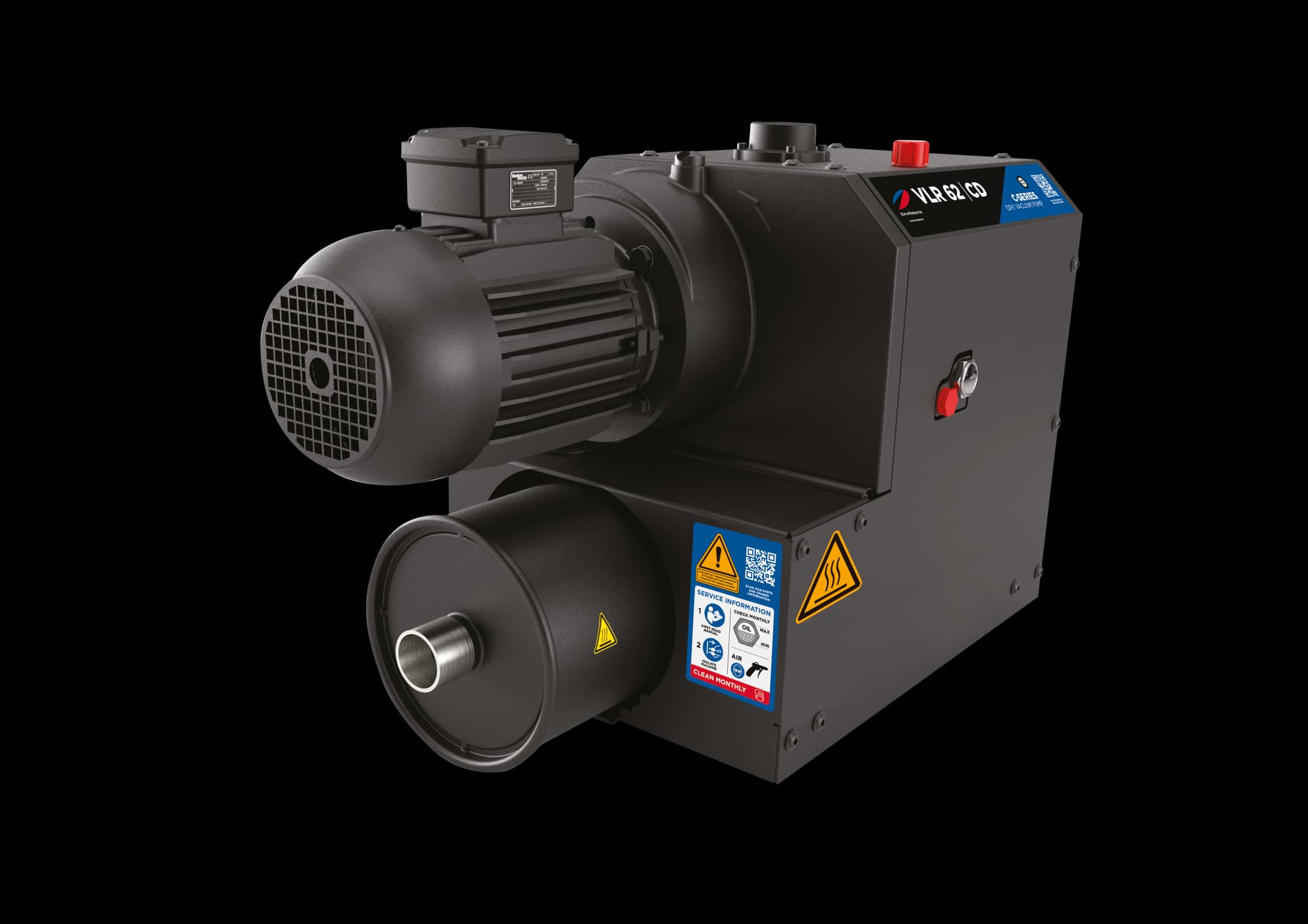
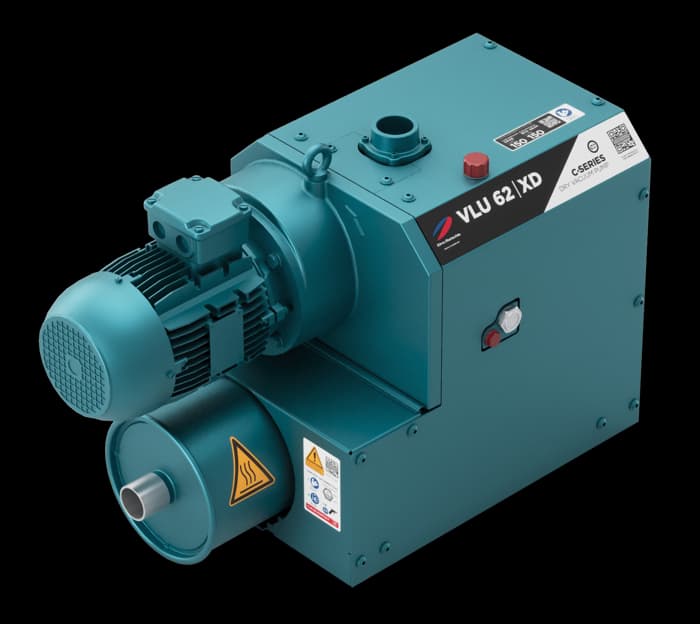
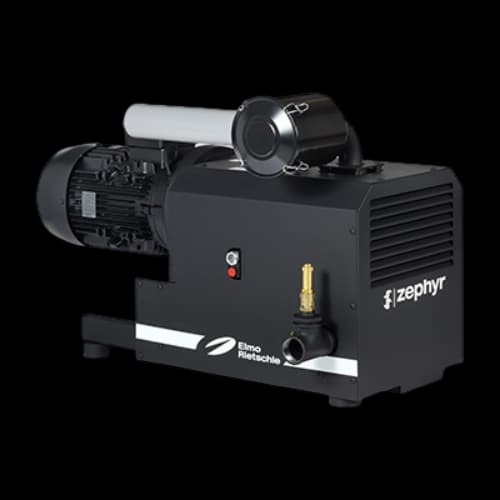
Claw pump series.
Click a series for technical data, versions and an enquiry.

Applications
Where they are used.
Packaging and food
- Pick & place
- Packaging forming
- Milking
- Pneumatic conveying
Plastics
- EPS foaming
- Calibration and extruder degassing
- Thermoforming
- Granulate conveying
Wood and electronics
- Nesting and work-holding
- Wood drying
- Pick & place in electronics
Medical and general
- Dental suction systems
- Central vacuum systems
- Vacuum sewage systems
Choosing the technology
When to choose claw pumps?
The right choice when
- You need dry, oil-free vacuum between 30 and 200 mbar(a)
- You want low energy use and almost no maintenance
- It is a central vacuum system or long running hours
- You need a dry compressor up to 2 bar
FAQ
Questions and answers.
How does a claw pump work?
Two claw-shaped rotors turn without contact, synchronised by gears. The gas is compressed inside the pump (internal compression), so efficiency is higher than with rotary lobe blowers.
What is the difference between the C-VLR and the C-VLU?
The C-VLR ZEPHYR reaches an ultimate vacuum of 50 mbar(a) and capacities up to 1,140 m³/h. The new C-VLU with a patented air end reaches 30 mbar(a) and comes in seven sizes up to VLU 1000.
Does a claw pump need oil?
Not in the compression chamber. Oil is only in the separate gear and bearing housing, so the exhaust air is oil-free and there are no oil filters to change.
When does a claw pump pay off instead of a rotary vane pump?
With long running hours and vacuum above 30 mbar(a). According to the manufacturer, at 4,000 hours a year the C-VLU has up to 96 % lower annual maintenance costs and up to 25 % lower total cost of ownership than an oil-lubricated rotary vane pump.
Tell us your requirements and we will propose the right solution.
Fill in a short form and we will prepare a proposal for a vacuum pump or blower based on flow, pressure, and operating conditions. If needed, we can also include filtration, silencers, and accessories.