

- KOMP-R
- Compressors
- Piston compressors
Bambi · Worthington Creyssensac · Balma
Piston compressors for every job
From quiet oil-free compressors for dental practices to two-stage compressors up to 30 bar and engine-driven compressors for field work. We help you choose, supply and service.
- models
- 229
- series
- 22
- motor power
- 0.34–15kW
- max. pressure
- 30bar
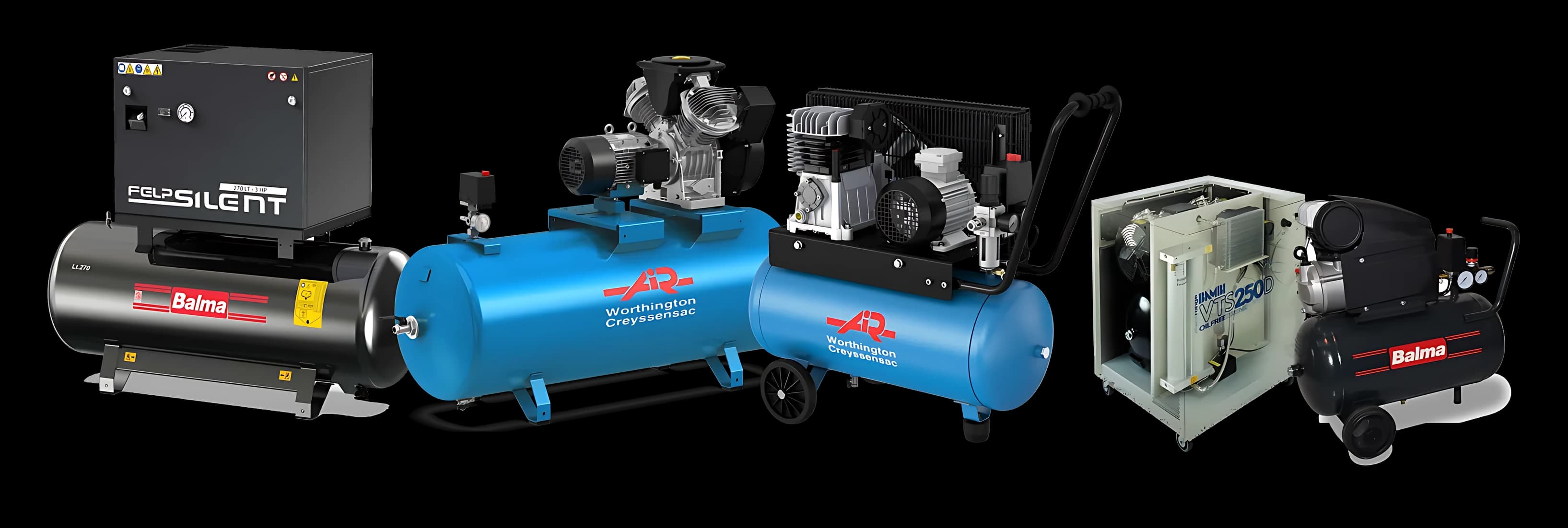


Manufacturers and series
Three manufacturers, 22 series
Each series has its own page with technical data for every model, equipment and a brochure.
Great Britain · Birmingham · 28 models
Quiet oil-lubricated and oil-free compressors
For more than 40 years, Bambi has designed and built quiet compressors for dental practices, laboratories, controls and dry sprinkler systems.
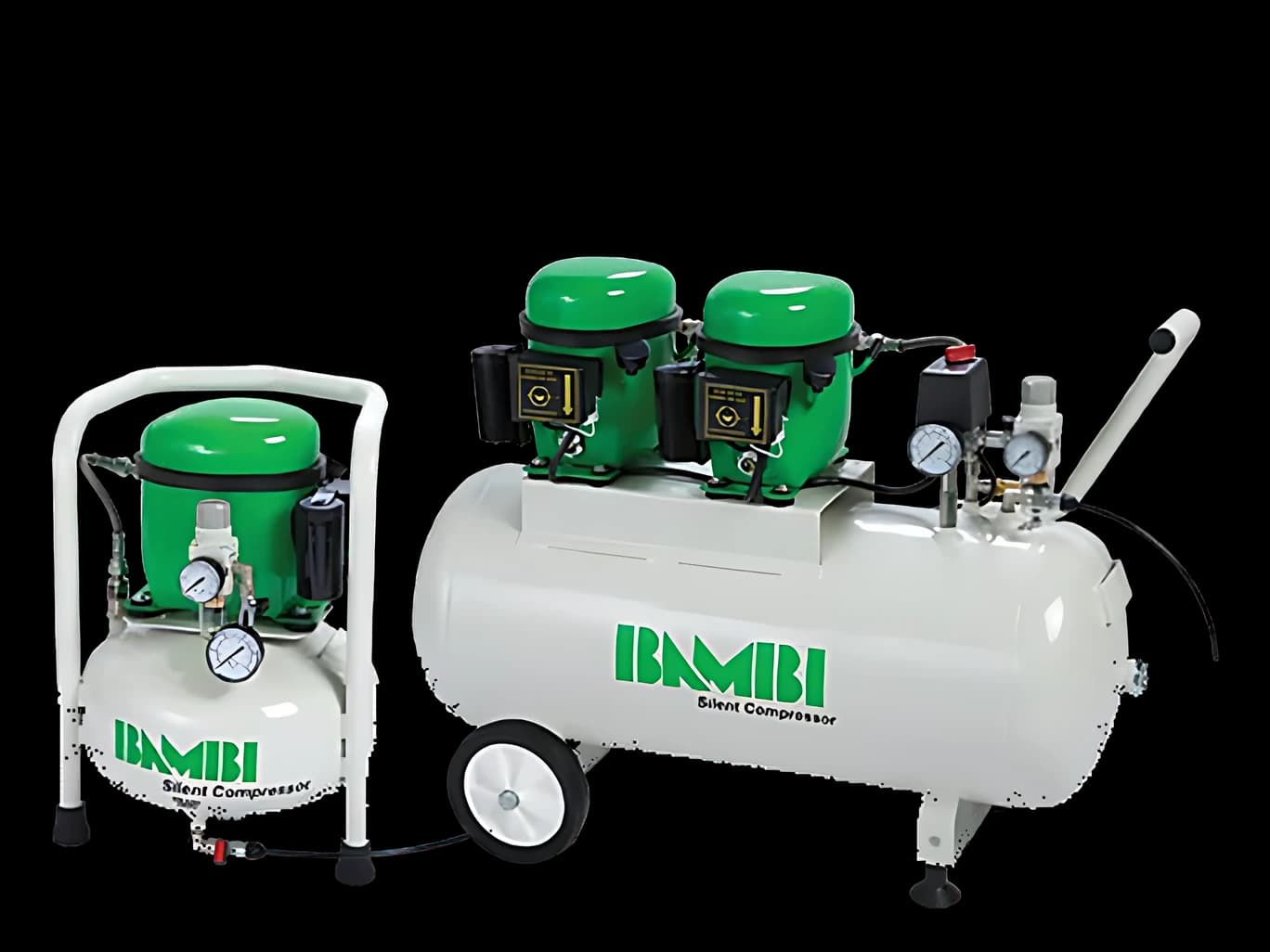 Oil-lubricated7 modelsBambi BBQuiet oil-lubricated compressors, 0.34–0.68 kW, 4–50 l receiver, from 54 dB(A).
- Power
- 0.34–0.68 kW
- Pressure
- 8 bar
- Flow
- 27–54 l/min FAD at 5 bar
 Oil-free6 modelsBambi PTQuiet oil-free compressors, 0.75–2.3 kW, up to 225 l/min at 5 bar, receiver up to 90 l.
- Power
- 0.75–2.3 kW
- Pressure
- 8 bar
- Flow
- 75–225 l/min FAD at 5 bar
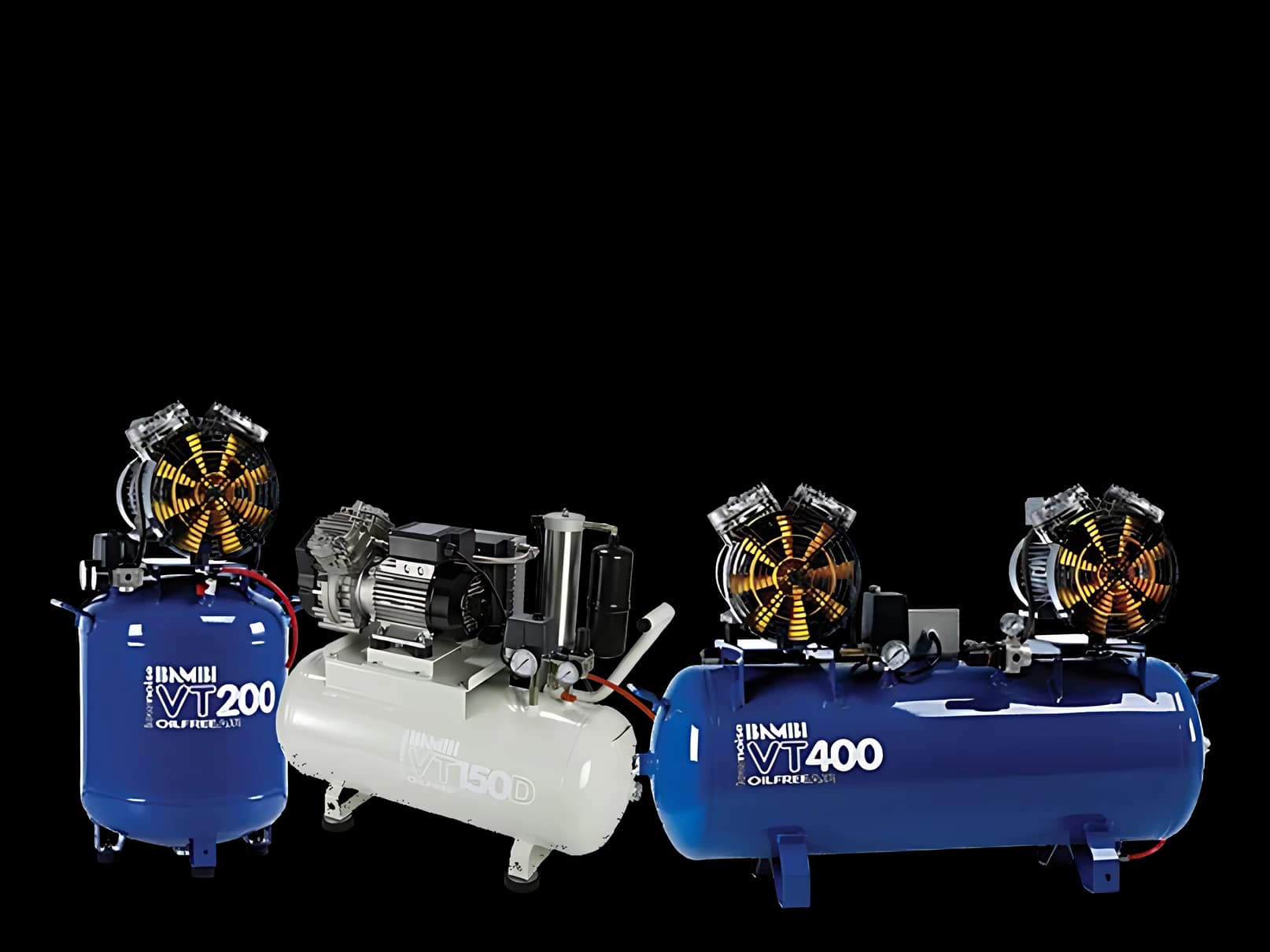 Oil-free6 modelsBambi VTVee Twin oil-free compressors, 0.55–3 kW, up to 316 l/min, optional dryer.
- Power
- 0.55–3 kW
- Pressure
- 8 bar
- Flow
- 58–316 l/min FAD at 5 bar
 Oil-free4 modelsBambi VTSUltra-quiet enclosed oil-free compressors, from 57 dB(A), up to 210 l/min.
- Power
- 0.55–1.84 kW
- Pressure
- 8 bar
- Flow
- 58–210 l/min FAD at 5 bar
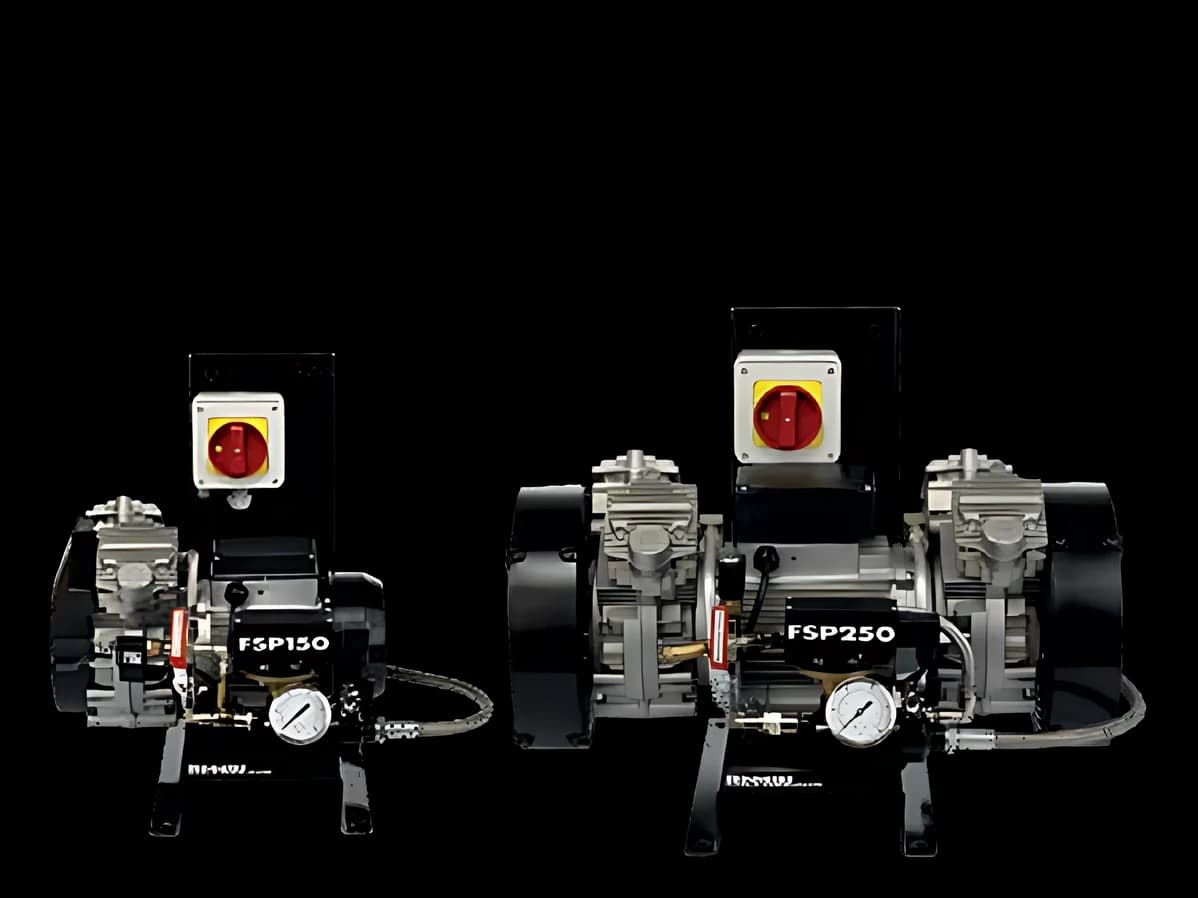 Oil-free5 modelsBambi FSOil-free compressors for dry sprinkler systems, 1.1–1.84 kW, 0–6 bar switch.
- Power
- 1.1–1.84 kW
- Pressure
- 0–6 switch bar
- Flow
- 175–300 l/min displaced
France · since 1934 · 77 models
Industrial and workshop compressors
The industrial Blocair range for a 100% duty cycle and up to 30 bar, plus the DIXAIR workshop range for DIY users and professionals.
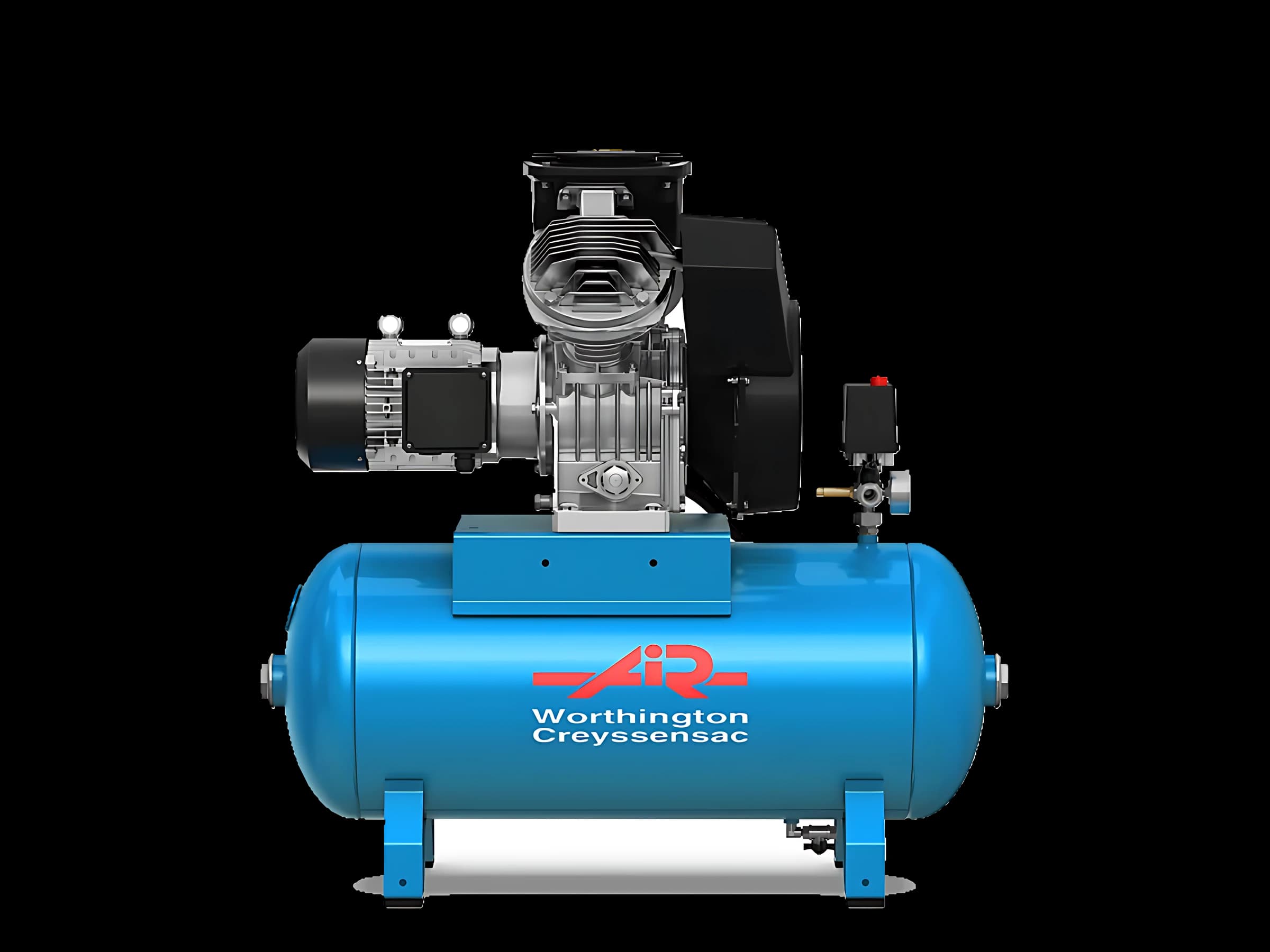
 Oil-lubricated6 modelsWorthington Creyssensac Blocair BHIndustrial oil-lubricated compressors, 1.5–7.5 kW, 10 bar, up to 942 l/min FAD.
- Power
- 1.5–7.5 kW
- Pressure
- 10 bar
- Flow
- 204–942 l/min FAD
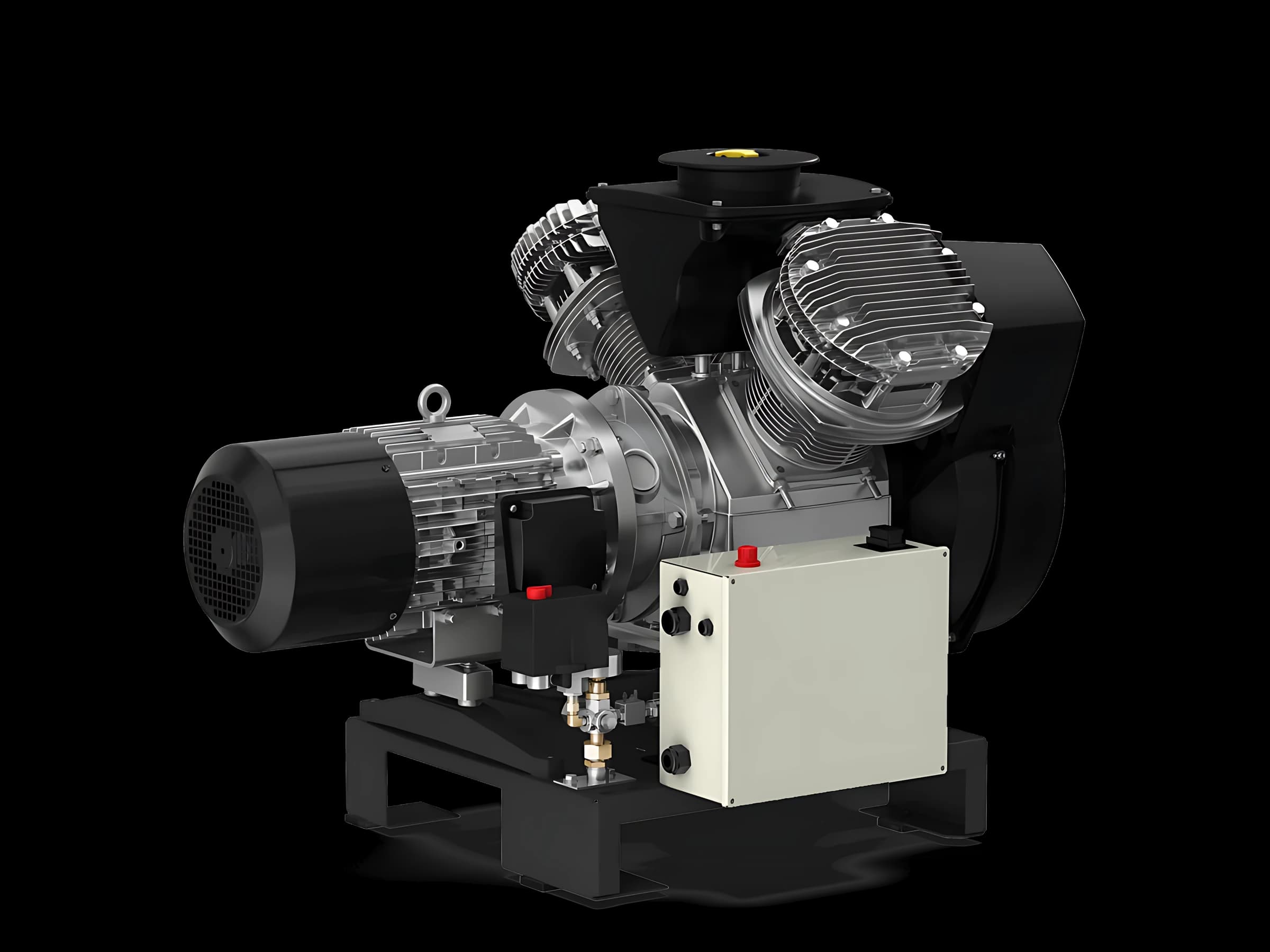
 Oil-free5 modelsWorthington Creyssensac Blocair BKOil-free industrial compressors, 1.5–7.5 kW, 10 bar, ISO 8573-1 Class 0.
- Power
- 1.5–7.5 kW
- Pressure
- 10 bar
- Flow
- 186–930 l/min FAD
 Oil-lubricated18 modelsWorthington Creyssensac Blocair BLTwo-stage compressors, 1.5–15 kW, for 15, 20 or 30 bar, up to 1080 l/min FAD.
- Power
- 1.5–15 kW
- Pressure
- 15–30 bar
- Flow
- 126–1080 l/min FAD
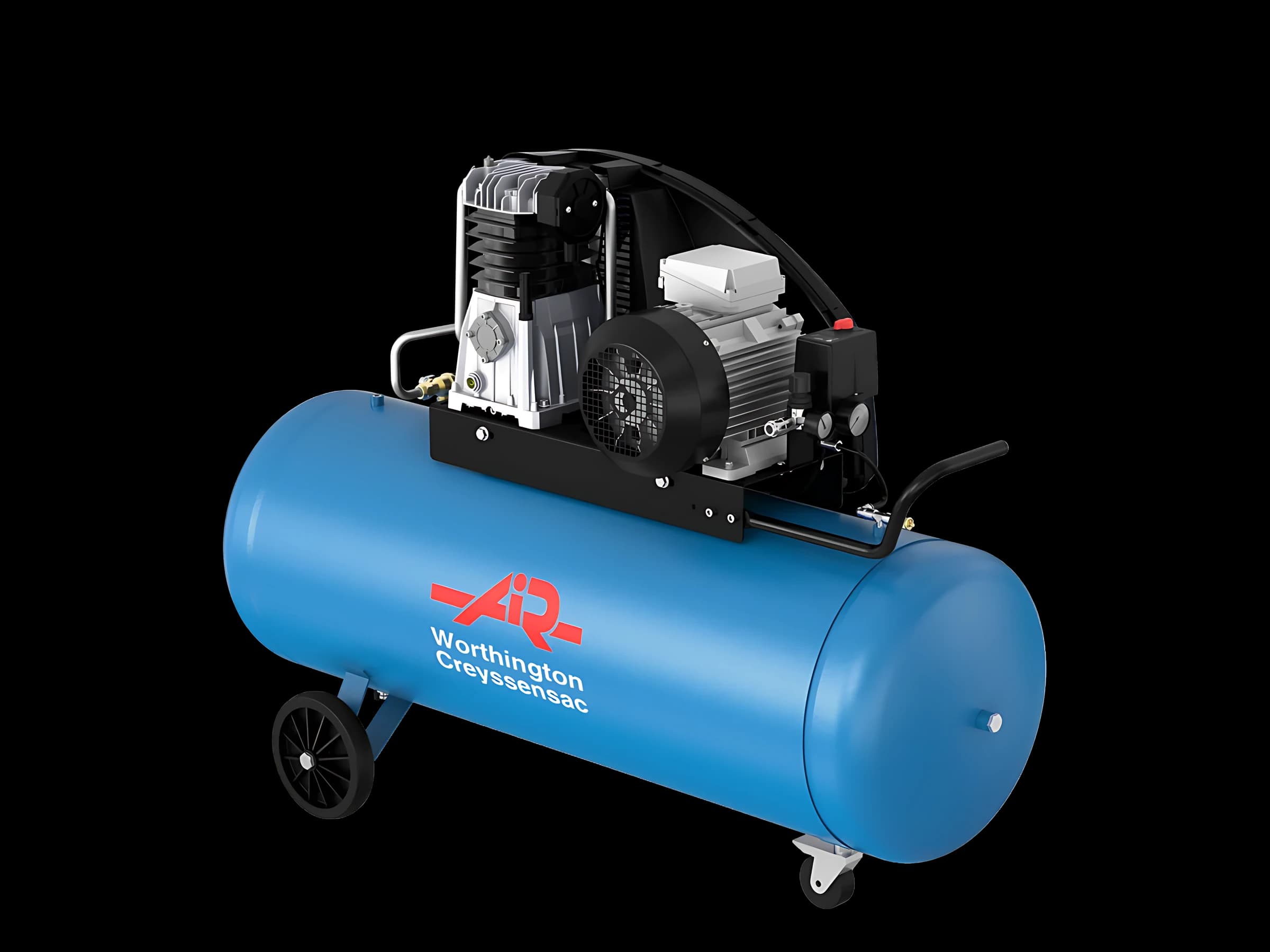 Oil-lubricated10 modelsWorthington Creyssensac DIXAIRBelt-driven compressors, 2–5.5 HP, 10 bar, 50–270 l receiver, for occasional use.
- Power
- 1.5–4.1 kW
- Pressure
- 10–11 bar
- Flow
- 255–595 l/min intake
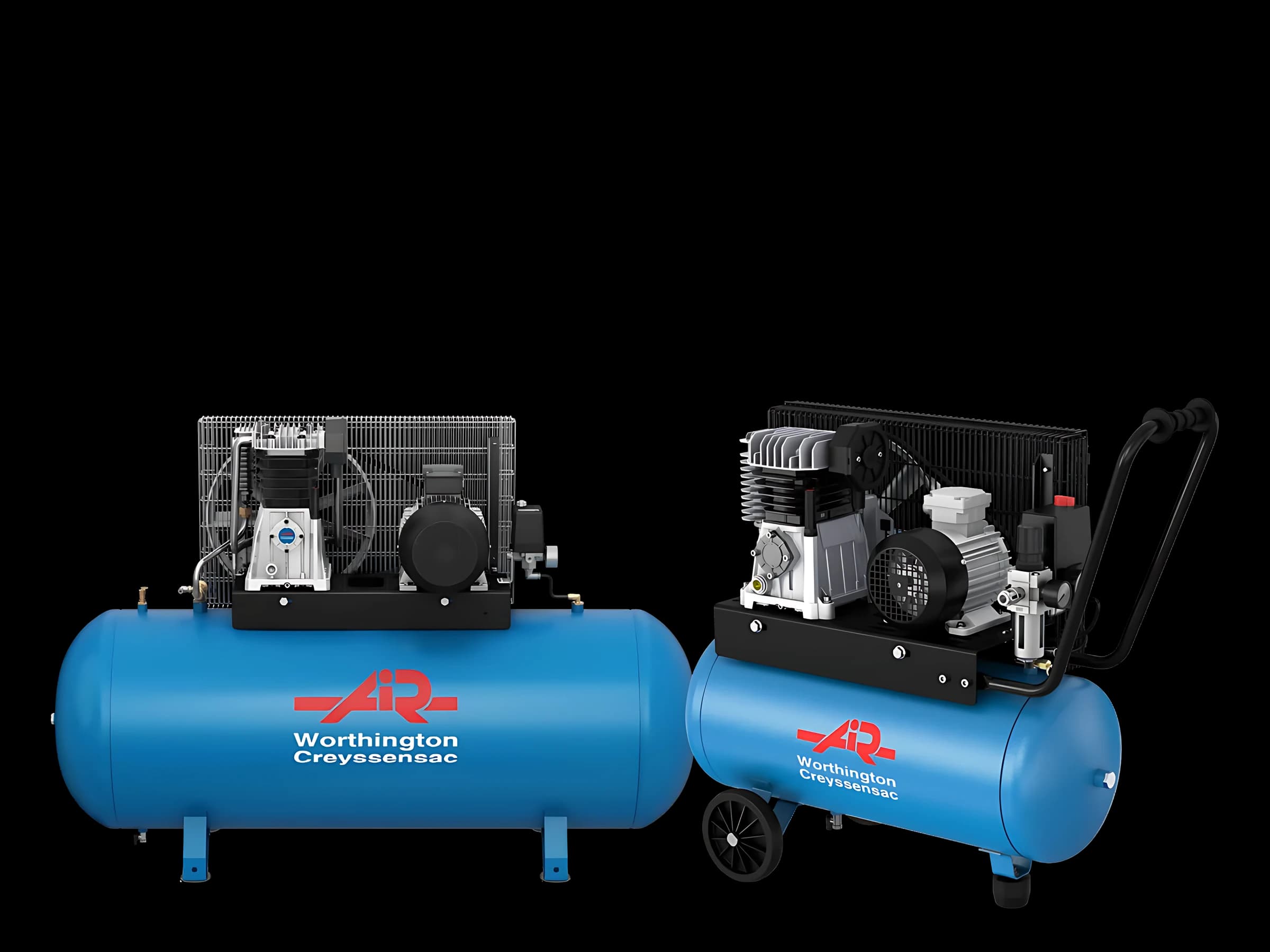 Oil-lubricated11 modelsWorthington Creyssensac DIXAIR PROProfessional belt-driven compressors, 2–3 HP, 10 bar, 50–200 l receiver.
- Power
- 1.5–2.2 kW
- Pressure
- 10 bar
- Flow
- 255–393 l/min intake
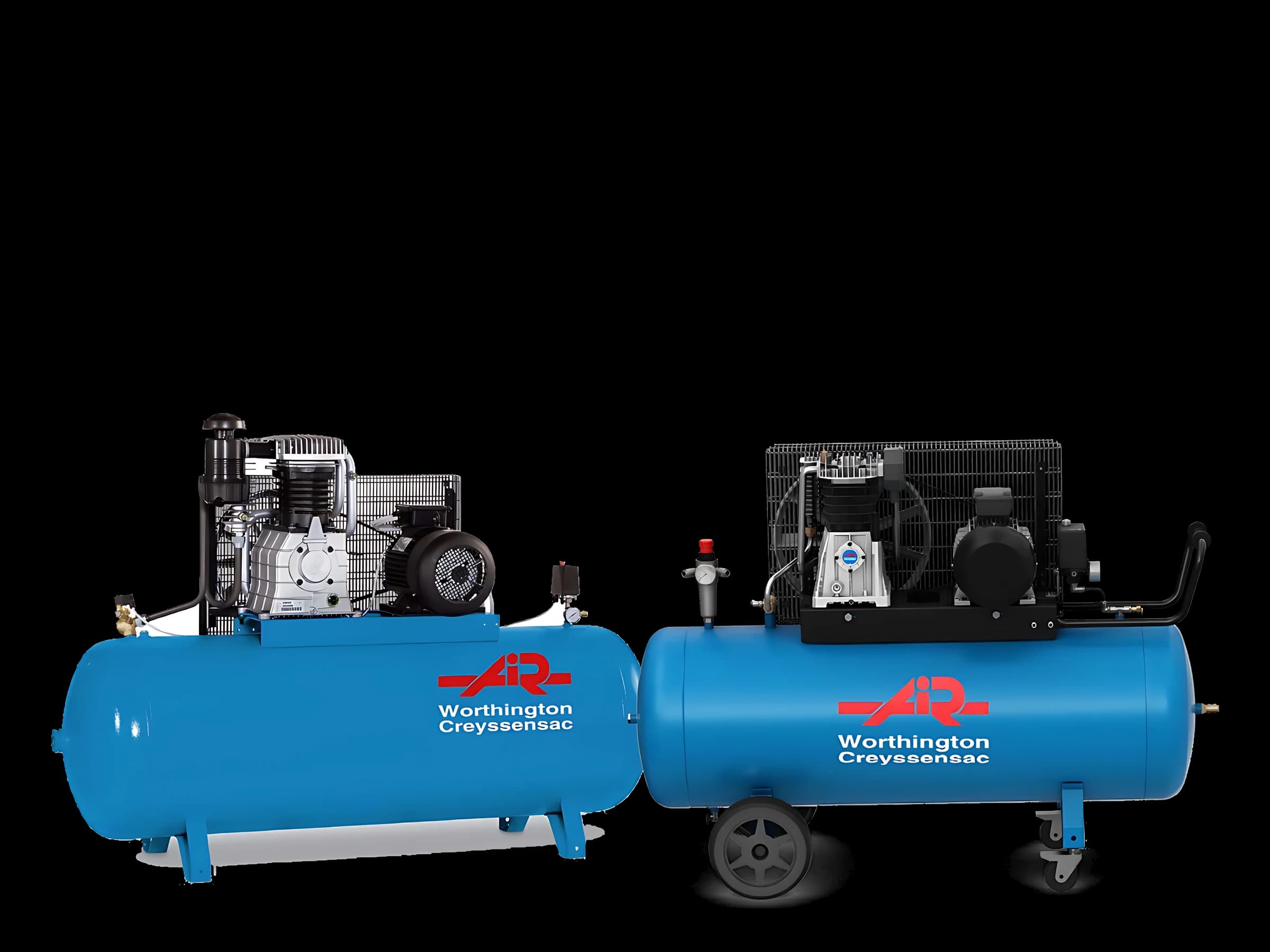 Oil-lubricated27 modelsWorthington Creyssensac DIXAIR PRO 11/15 barTwo-stage compressors, 3–10 HP, for 11 or 15 bar, 90–500 l receiver.
- Power
- 2.2–7.5 kW
- Pressure
- 11–15 bar
- Flow
- 444–1130 l/min intake
Italy · Turin, since 1950 · 124 models
From portable to engine-driven compressors
Direct-drive and belt-driven compressors, quiet enclosed versions, engine-driven compressors for field work and oil-free cleanAIR for dental practices.
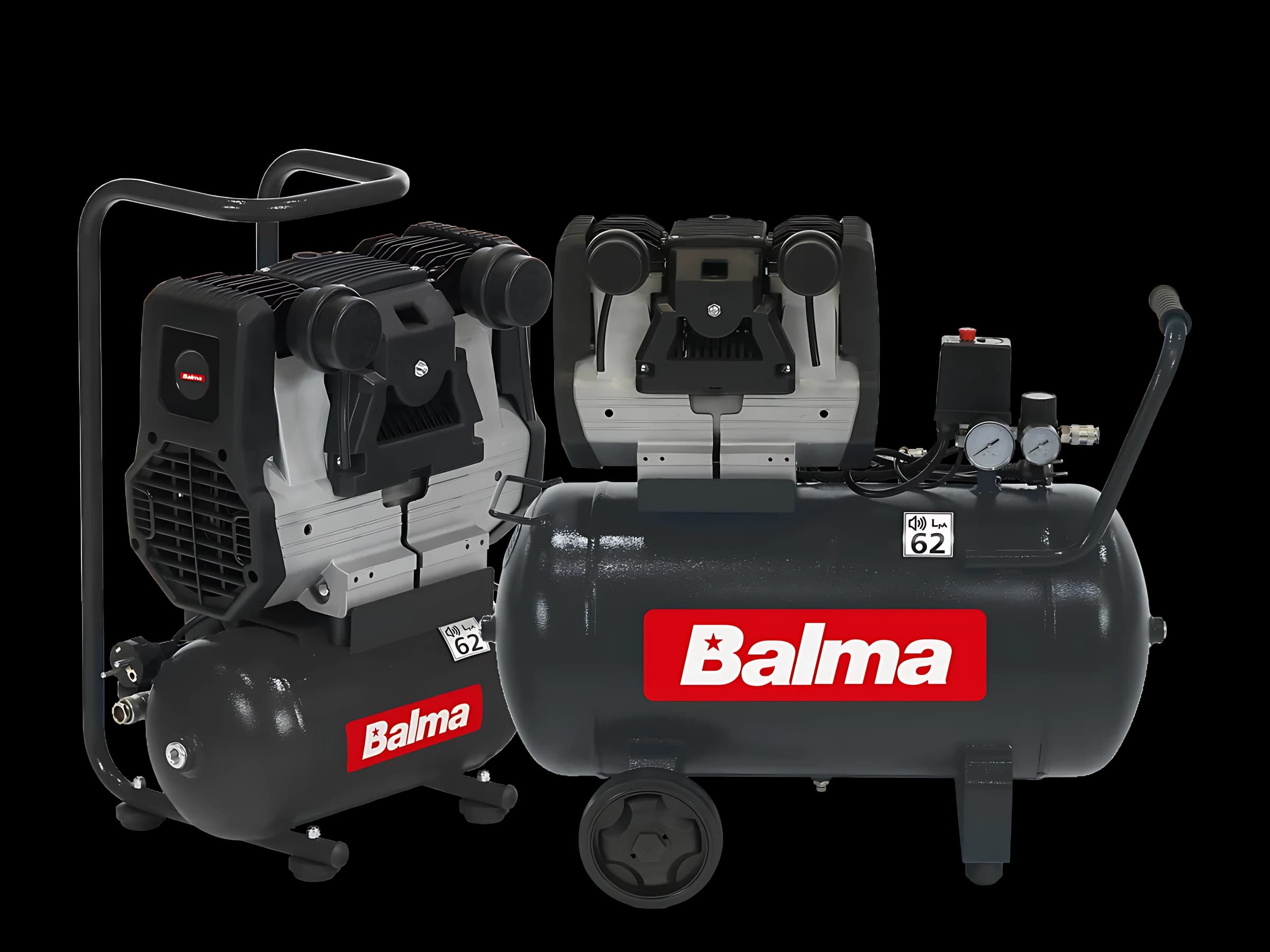 Oil-free3 modelsBalma SOFFIO MX20Quiet oil-free compressors, 1.5 kW, 9 bar, 62 dB(A), 6–50 l receiver.
- Power
- 1.5 kW
- Pressure
- 9 bar
- Flow
- 230 l/min intake
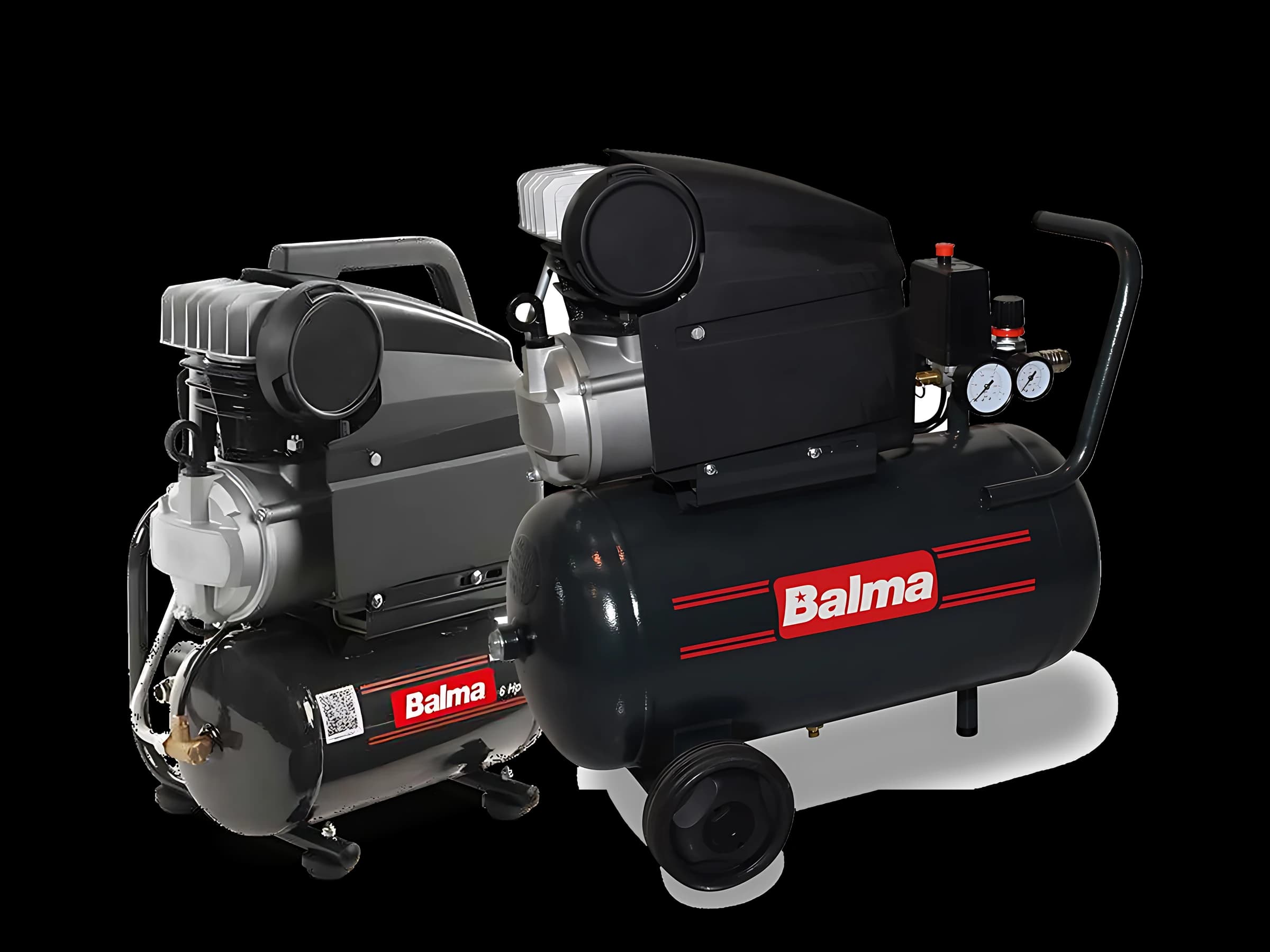 Oil-lubricated and oil-free4 modelsBalma MF15 / MS20Direct-drive compressors, 1.1–1.5 kW, 8–10 bar, oil-free or oil-lubricated.
- Power
- 1.1–1.5 kW
- Pressure
- 8–10 bar
- Flow
- 160–220 l/min intake
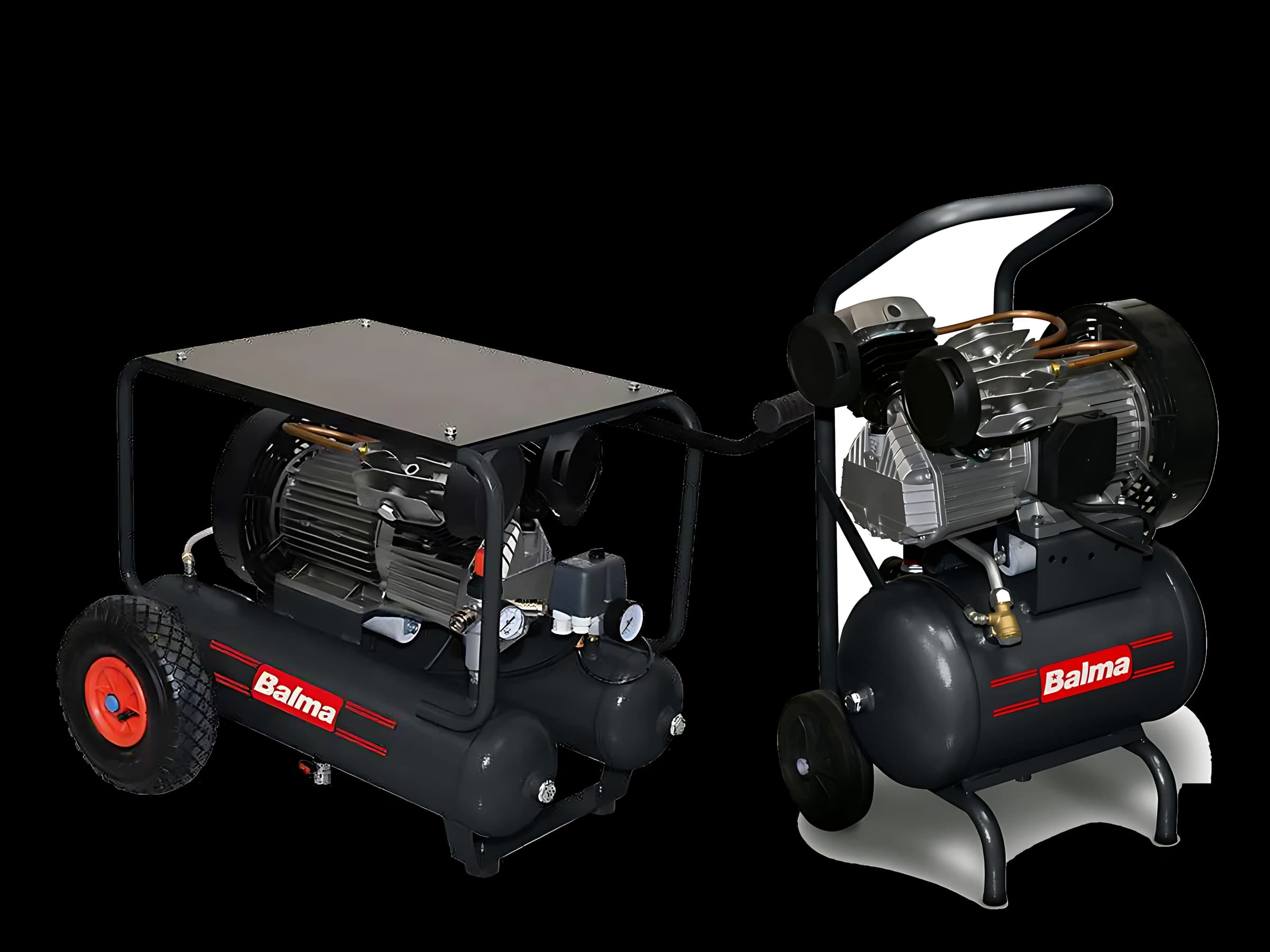 Oil-lubricated3 modelsBalma MV303 HP V-twin, 10 bar, 330 l/min, 20, 50 or 2 × 11 l receiver.
- Power
- 2.2 kW
- Pressure
- 10 bar
- Flow
- 330 l/min intake
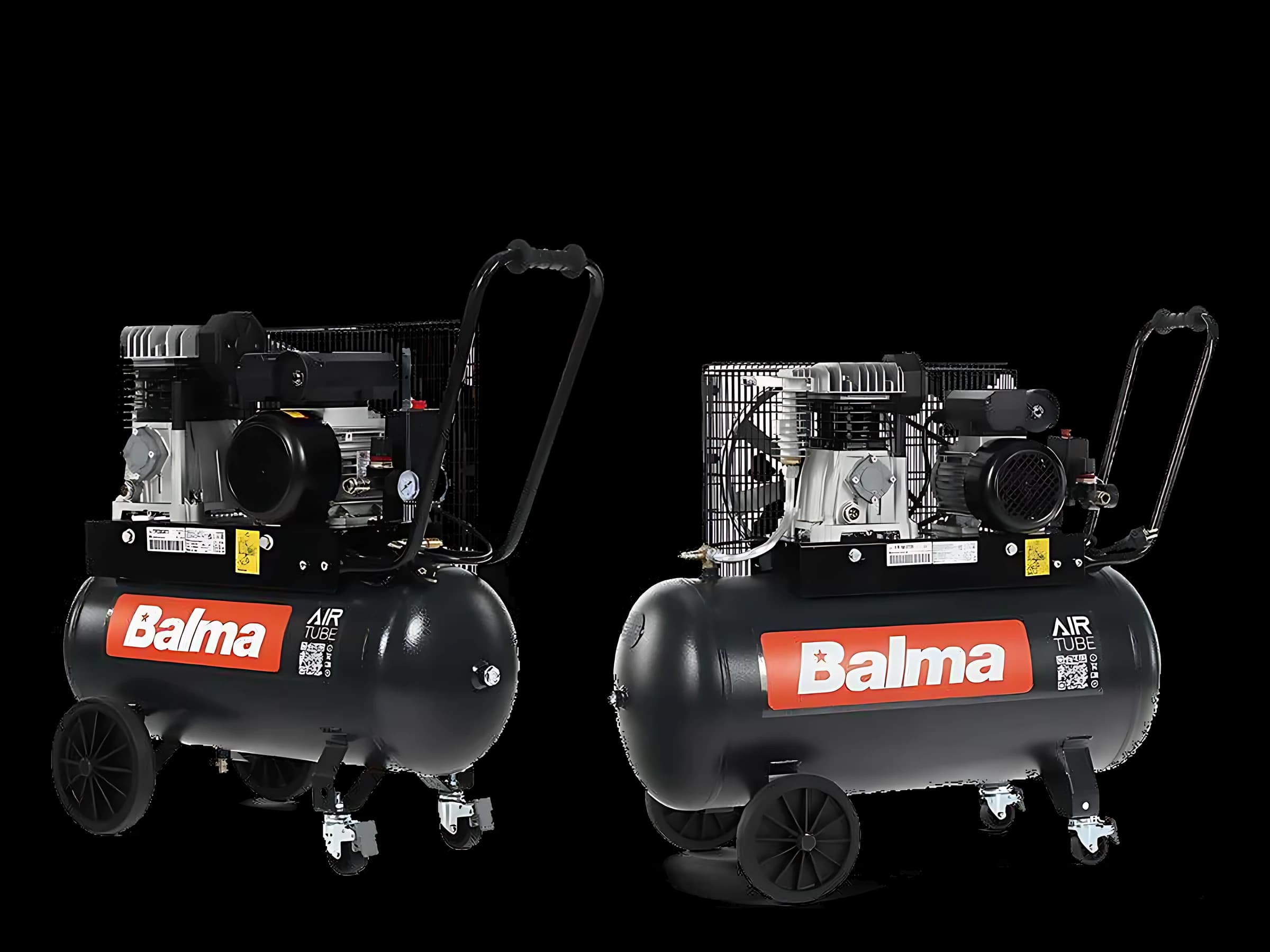 Oil-lubricated10 modelsBalma NS12SBelt-driven compressors, 2–3 HP, 10 bar, 255–320 l/min, 50–270 l receiver.
- Power
- 1.5–2.2 kW
- Pressure
- 10 bar
- Flow
- 255–320 l/min intake
 Oil-lubricated11 modelsBalma NS19SBelt-driven compressors, 3–4 HP, 10 bar, up to 486 l/min, 50–270 l receiver.
- Power
- 2.2–3 kW
- Pressure
- 10 bar
- Flow
- 393–486 l/min intake
 Oil-lubricated6 modelsBalma NS31STwo-stage compressors, 3–5.5 HP, up to 11 bar, up to 595 l/min, 100–270 l receiver.
- Power
- 2.2–4.1 kW
- Pressure
- 10–11 bar
- Flow
- 393–595 l/min intake
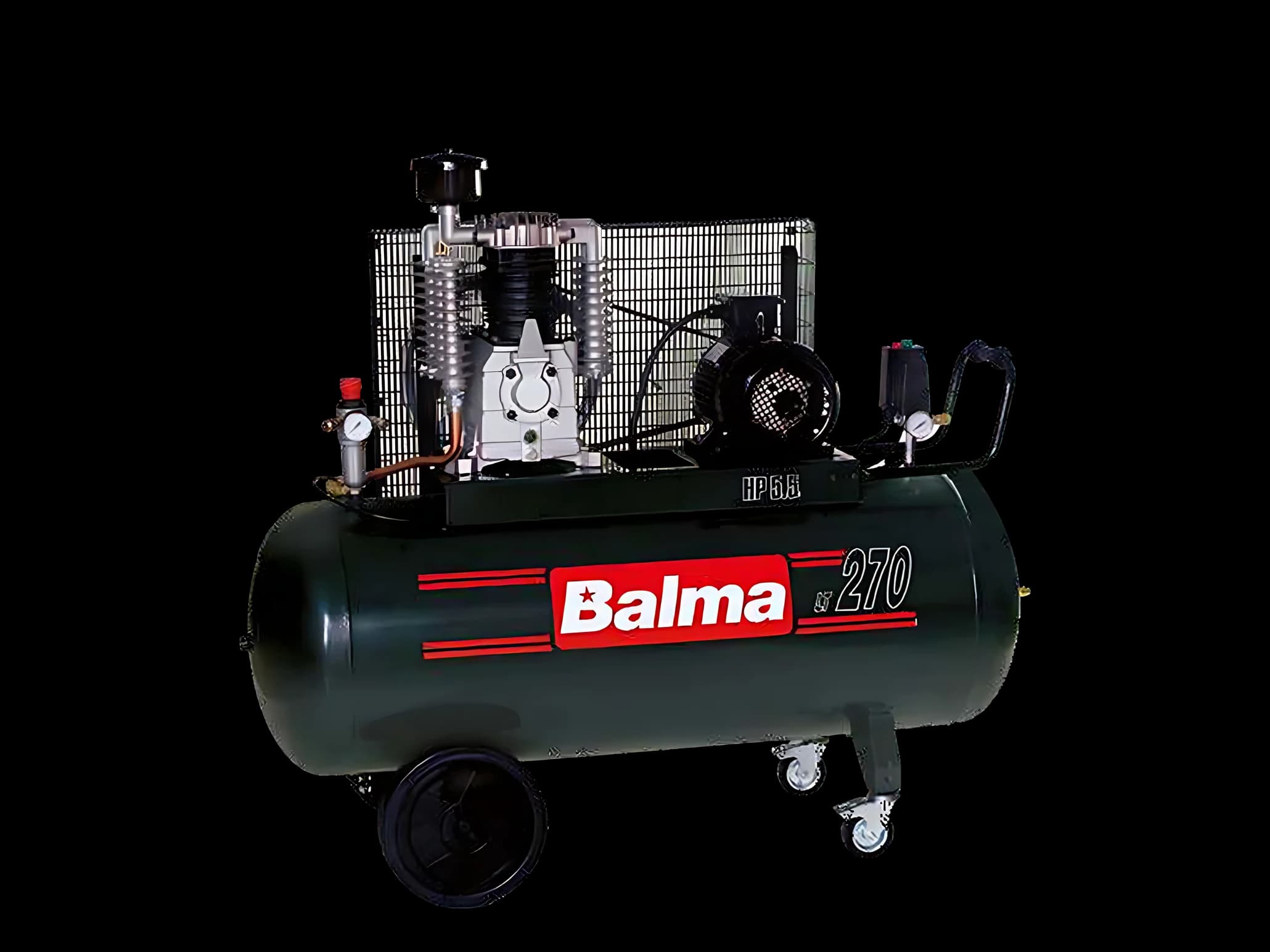 Oil-lubricated11 modelsBalma NS39 / NS59STwo-stage compressors, 5.5–15 HP, 11 bar, up to 1210 l/min, also TANDEM.
- Power
- 4–11 kW
- Pressure
- 11 bar
- Flow
- 653–1210 l/min intake
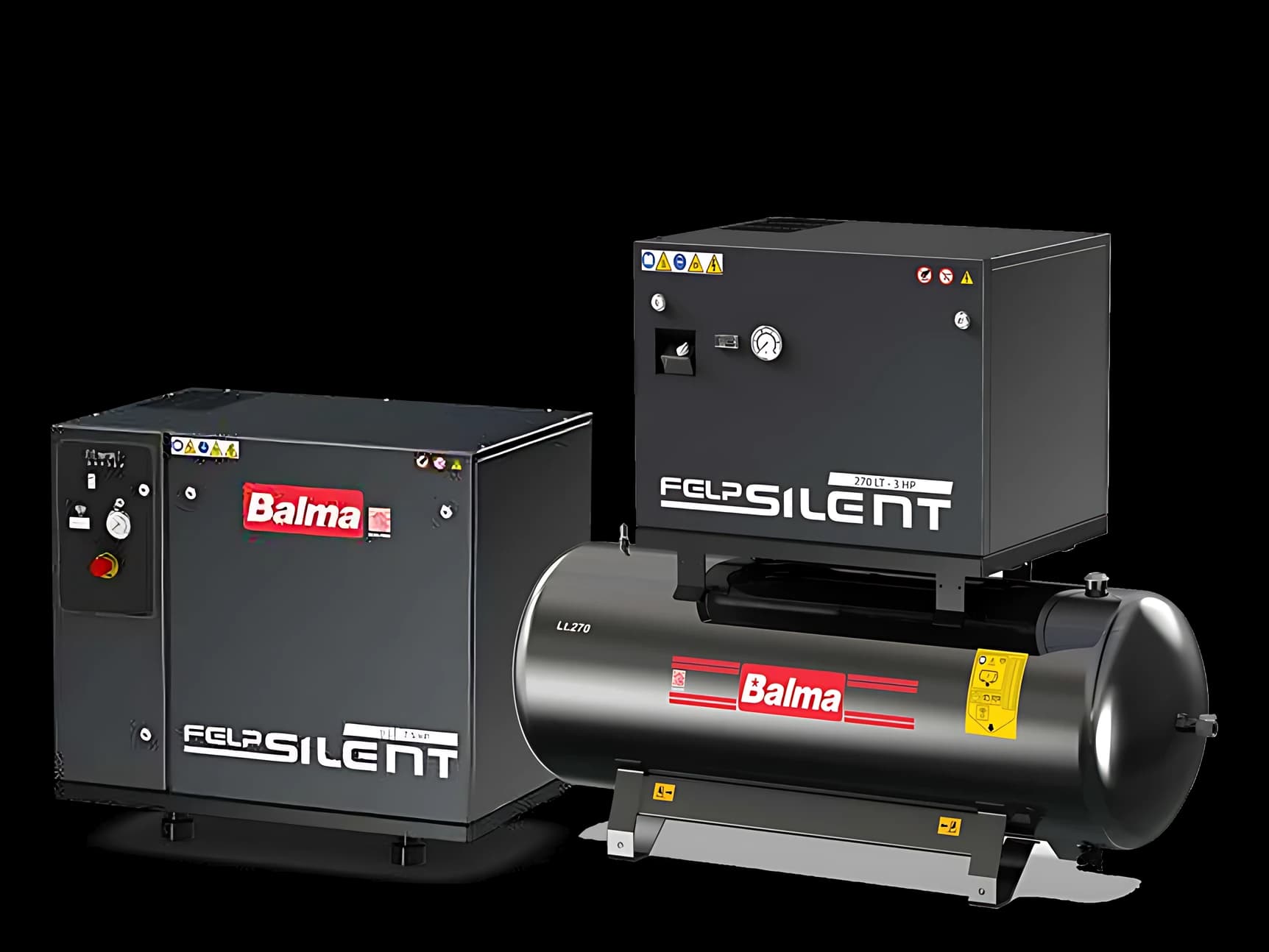 Oil-lubricated32 modelsBalma FELP SILENTQuiet enclosed compressors, 2–10 HP, up to 11 bar, on a base or receiver, also with dryer.
- Power
- 1.5–7.5 kW
- Pressure
- 10–11 bar
- Flow
- 255–1070 l/min intake
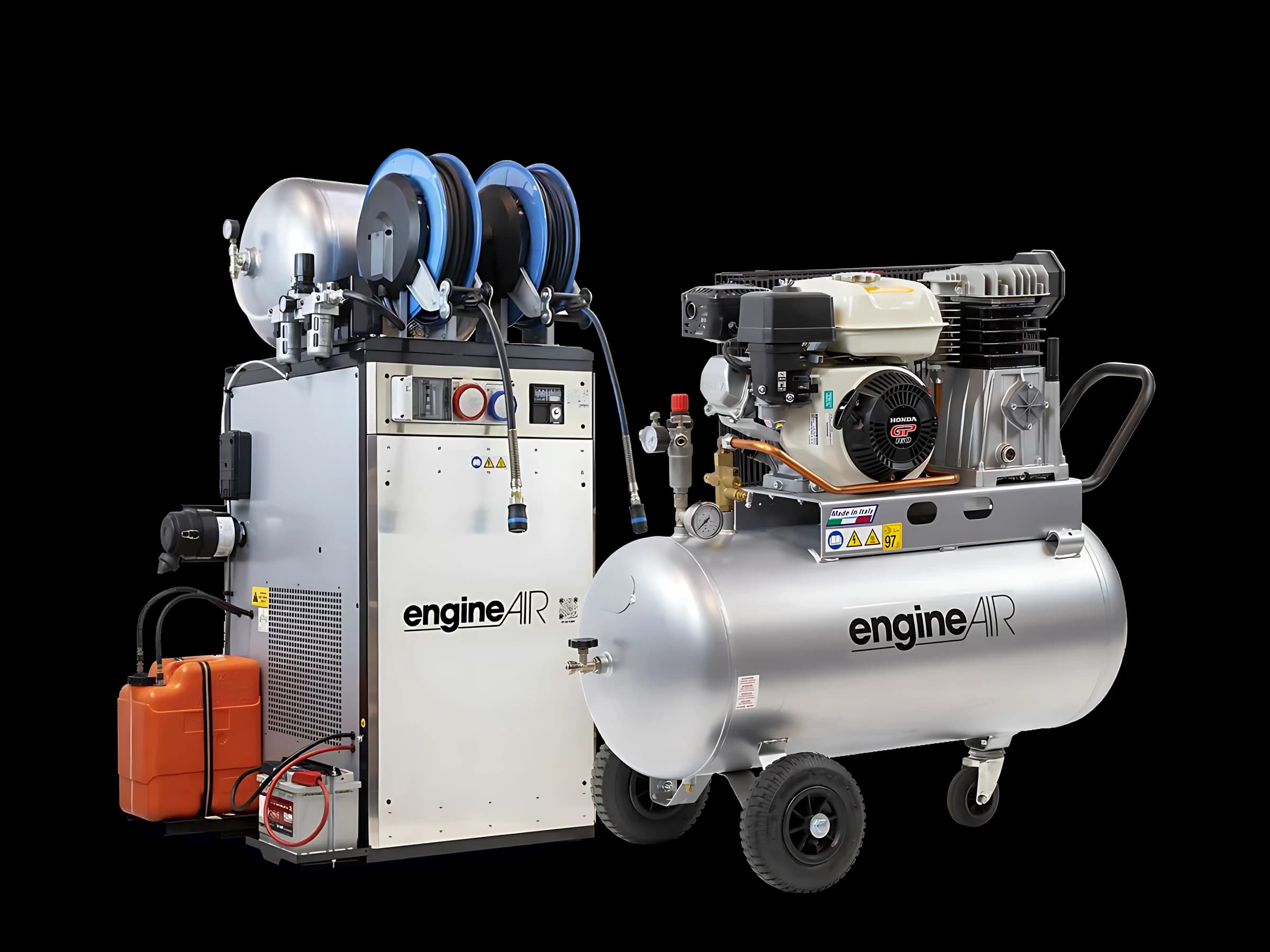 Oil-lubricated22 modelsBalma engineAIREngine-driven compressors, 4.8–17 HP, petrol or diesel, 10–14 bar, up to 1038 l/min.
- Power
- 3.6–12.8 kW
- Pressure
- 10–14 bar
- Flow
- 275–1038 l/min intake
 Oil-free14 modelsBalma cleanAIROil-free compressors for 1–5 dental chairs, 8 bar, with dryer or acoustic hood.
- Power
- 1.1–2 kW
- Pressure
- 8 bar
- Flow
- 125–240 l/min FAD at 5 bar
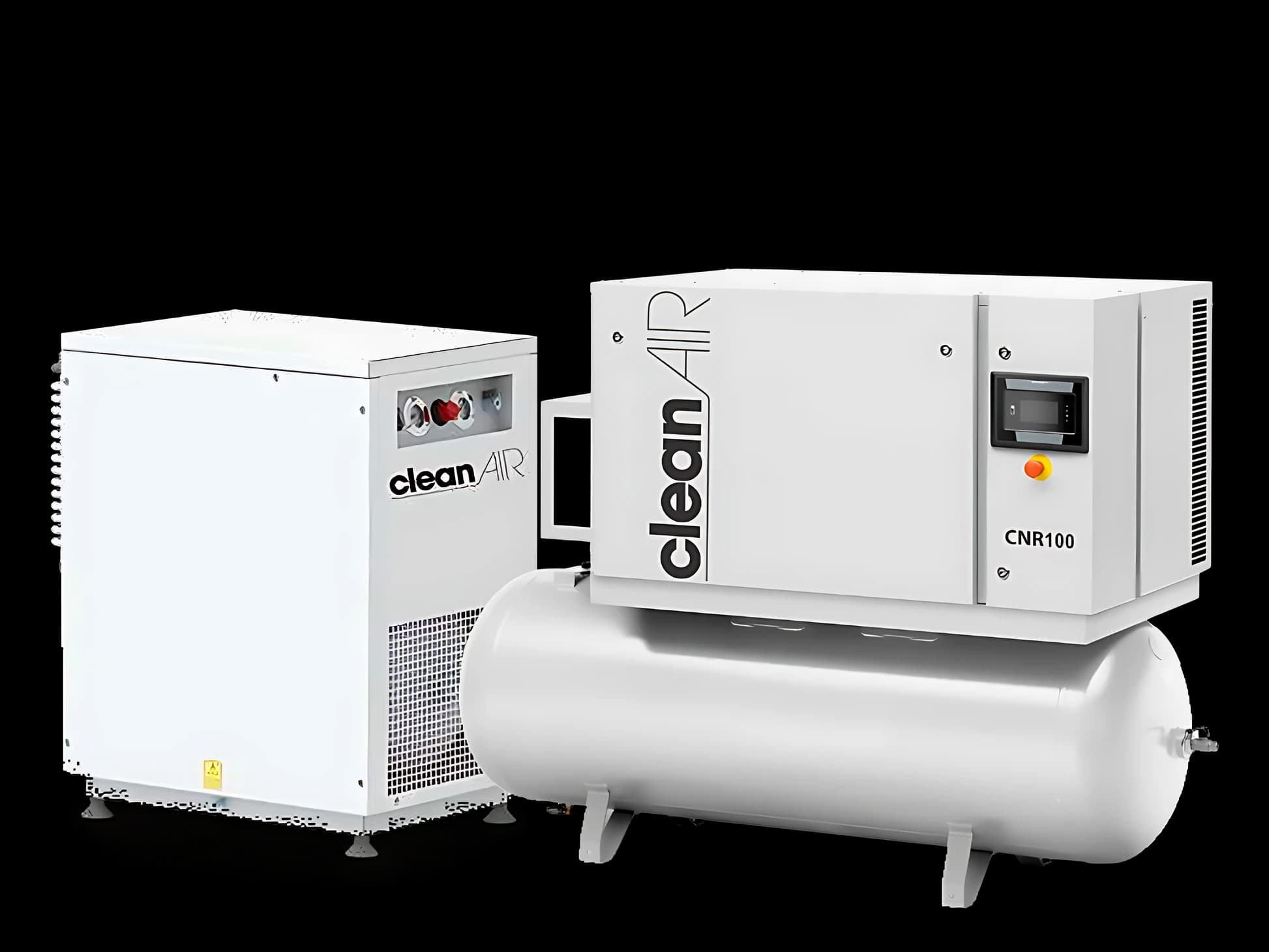 Oil-free8 modelsBalma cleanAIR CNRLarge oil-free compressors, 5.5–20 HP, 10 bar, up to 1860 l/min FAD, enclosed.
- Power
- 4–15 kW
- Pressure
- 10 bar
- Flow
- 492–1860 l/min FAD at 5 bar
Model finder
Find the right model
Filter all 229 models by manufacturer, lubrication, pressure, power and features. Click a model to open its series page.
229 models
| Model | Series | kW | bar | Flow l/min | Receiver l | dB(A) | kg |
|---|---|---|---|---|---|---|---|
| 35/20 | Bambi BB | 0.34 | 8 | 27 FAD 5 bar | 4 | 55 | 18 |
| BB8 | Bambi BB | 0.34 | 8 | 27 FAD 5 bar | 9 | 54 | 21 |
| BB15V | Bambi BB | 0.34 | 8 | 27 FAD 5 bar | 15 | 54 | 22 |
| BB24V | Bambi BB | 0.34 | 8 | 27 FAD 5 bar | 24 | 54 | 28 |
| BB24 | Bambi BB | 0.34 | 8 | 27 FAD 5 bar | 24 | 54 | 26 |
| BB24D | Bambi BB | 0.68 | 8 | 54 FAD 5 bar | 24 | 61 | 31 |
| BB50D | Bambi BB | 0.68 | 8 | 54 FAD 5 bar | 50 | 61 | 46 |
| PT5 | Bambi PT | 0.75 | 8 | 75 FAD 5 bar | 4 | 67 | 17 |
| PT15 | Bambi PT | 0.75 | 8 | 75 FAD 5 bar | 15 | 72 | 23 |
| PT24 | Bambi PT | 0.75 | 8 | 75 FAD 5 bar | 24 | 74 | 25 |
| PTH24 | Bambi PT | 0.75 | 8 | 75 FAD 5 bar | 24 | 74 | 27 |
| PT50 | Bambi PT | 1.5 | 8 | 150 FAD 5 bar | 50 | 67 | 44 |
| PT90 | Bambi PT | 2.3 | 8 | 225 FAD 5 bar | 90 | 72 | 85 |
| VT75 | Bambi VT | 0.55 | 8 | 58 FAD 5 bar | 24 | 74 | 29 |
| VT150 | Bambi VT | 1.1 | 8 | 125 FAD 5 bar | 50 | 78 | 40 |
| VT200 | Bambi VT | 1.5 | 8 | 158 FAD 5 bar | 50 | 77 | 44 |
| VT250 | Bambi VT | 1.84 | 8 | 210 FAD 5 bar | 59 | 82 | 62 |
| VT300 | Bambi VT | 2.2 | 8 | 250 FAD 5 bar | 100 | 81 | 75 |
| VT400 | Bambi VT | 3 | 8 | 316 FAD 5 bar | 100 | 80 | 85 |
| VTS75 | Bambi VTS | 0.55 | 8 | 58 FAD 5 bar | 23 | 57 | 64 |
Flow is given as stated by the manufacturer. FAD is the actual air delivered, while intake volume (Balma, DIXAIR) is a theoretical value and can be considerably higher than FAD.
How it works
How a piston compressor works
The piston moves up and down in the cylinder, while the intake and discharge valves make sure air flows one way only – from the surroundings into the receiver.
- 01
Intake
The piston moves down, the intake valve opens and air enters the cylinder through the filter.
- 02
Compression
The piston moves up, both valves are closed, the volume shrinks and the pressure rises.
- 03
Discharge
When the cylinder pressure exceeds the receiver pressure, the discharge valve opens and air flows into the receiver.
- 04
Receiver and switch
The receiver stores air and covers demand peaks, while the pressure switch stops the compressor at the upper and restarts it at the lower pressure.
Single- or two-stage
A single-stage unit compresses air in one step to about 10 bar. A two-stage unit compresses it in two stages with intercooling – for 11 to 30 bar, with lower temperature and higher efficiency.
Oil-lubricated or oil-free
Oil-lubricated units are robust and affordable, but some oil remains in the air. Oil-free units have no oil in the compression chamber – the right choice for dentistry, laboratories and food.
Direct or belt drive
With direct drive the pump sits on the motor shaft – compact and light. A belt lowers the pump speed: less wear, lower temperature and a longer service life.
Piston or screw
Piston or screw compressor?
Both compress air, but they are built for different demand. Air volume and running time decide.
| Piston compressor | Screw compressor | |
|---|---|---|
| Air demand | occasional or intermittent | constant and high |
| Operation | with breaks; Blocair up to 100% | up to 100%, even 24/7 |
| Power | 0.34–15 kW | 2.2–290 kW |
| Pressure | up to 10 bar, two-stage up to 30 bar | 5–13 bar |
| Purchase price | lower | higher |
| Typical use | workshops, dental practices, laboratories, field work | production and industry |
If the compressor runs for several hours a day without a break, a screw compressor is usually cheaper to operate. Screw compressors →
Buying advice
How to choose a piston compressor
- 01
Air demand
Add up the consumption of the tools that run at the same time and add a 20–30% reserve. Compare it with the actual delivery (FAD), not the intake volume.
- 02
Pressure
Most air tools work at 6–7 bar; the compressor should have a 1–2 bar reserve. For truck tyres choose 15 bar, for lasers and PET 20–30 bar.
- 03
Running time
A single-stage compressor is enough for occasional work. For work lasting several hours, choose a two-stage unit or an industrial Blocair with a 100% duty cycle.
- 04
Air quality
For dentistry, laboratories, food and medicine choose an oil-free compressor with a dryer. For tools and painting, an oil-lubricated compressor with a filter is enough.
- 05
Noise
If the compressor stands in a work area, choose a quiet enclosed version – Bambi VTS, Balma FELP SILENT or cleanAIR S/ST.
- 06
Supply and receiver
Smaller compressors run on 230 V, larger ones need 400 V. A larger receiver means fewer starts and steadier pressure.
FAQ
Questions about piston compressors
Can't find the answer? Call us or send an enquiry.
What is the difference between intake volume and FAD?
Intake volume is the volume of air the pistons theoretically draw in. FAD (free air delivery) is the actual amount of air the compressor delivers at working pressure – it is always lower because of losses. Use FAD when choosing.
Do I need an oil-free compressor?
You need an oil-free compressor wherever oil in the air would put the product or health at risk: in dentistry, laboratories, food and pharmaceutical production and medicine. For air tools, an oil-lubricated compressor with a filter is enough.
Can a piston compressor run continuously?
Most piston compressors need breaks to cool down. Continuous work is what the industrial Worthington Creyssensac Blocair with a 100% duty cycle is built for; for high constant demand, choose a screw compressor.
How big should the air receiver be?
The receiver covers demand peaks and reduces the number of starts. For occasional tool use, 50–100 l is usually enough; workshops with several users need 200–500 l.
How do I maintain a piston compressor?
Drain condensate from the receiver regularly and check the oil level. Replace the intake filter, oil and belt as specified by the manufacturer. We also carry out regular servicing.
Do you also supply dryers and filters?
Yes. Besides compressors, we supply complete air treatment – filters, dryers and condensate separators. Bambi VT and VTS and Balma FELP SILENT and cleanAIR are also available with a dryer.
Do you offer service and spare parts?
Yes. We advise on selection, supply and commission the compressor, and provide regular servicing and genuine spare parts for all piston compressors in our range.
Tell us your requirements and we will propose the right compressor.
Fill in a short form and we will prepare a configuration proposal.